
Introduction
Winning government contracts requires more than simply responding to every requirement in a Request for Proposal (RFP). Many organizations invest significant time writing detailed responses but overlook the strategic planning needed to demonstrate why they are the best choice. As a result, proposals often become compliance documents rather than persuasive business solutions.
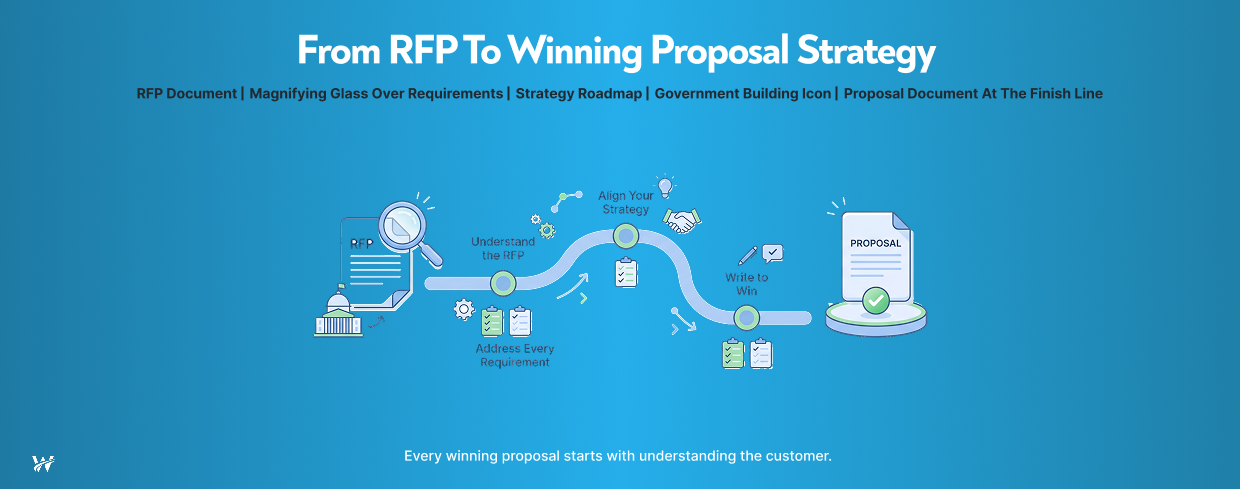
A successful proposal starts long before writing begins. It begins with understanding what the customer truly needs, identifying the agency's priorities, and developing a proposal strategy that aligns every section of the response with the evaluation criteria. Whether pursuing federal, state, or local government opportunities, a well-planned strategy can significantly improve your chances of winning.
Understanding the Purpose of an RFP
An RFP is much more than a document outlining technical requirements. It provides valuable insight into the customer's mission, operational challenges, and expectations for project delivery.
Every section of the solicitation offers clues about what matters most to the evaluation team.
Rather than viewing the RFP as a checklist, proposal teams should treat it as a roadmap for developing a solution that addresses both stated requirements and underlying business objectives.
A thorough RFP analysis helps organizations understand:
These insights allow proposal teams to position their solutions in ways that directly support the customer's goals.
Go Beyond Compliance
Meeting every requirement is essential, but compliance alone rarely wins contracts. Government evaluators often review multiple technically acceptable proposals, making differentiation critical.
Winning proposals demonstrate how the proposed solution delivers measurable value. Instead of simply stating that a requirement will be met, successful proposals explain how the approach improves efficiency, reduces risk, supports mission success, or enhances long-term outcomes.
This customer-focused approach transforms a compliant proposal into a compelling one.
Start with Customer Research
Before developing proposal content, invest time in understanding the customer.
Research can include:
This information helps proposal teams understand the environment in which the customer operates and identify challenges that may not be explicitly stated in the solicitation.
When your proposal reflects this understanding, evaluators recognize that your team has taken the time to understand their mission rather than simply responding to requirements.
Map Requirements to Your Solution
One of the most effective proposal management techniques is creating a comprehensive compliance matrix.
A compliance matrix maps every solicitation requirement to the section of the proposal where it is addressed. This process ensures that nothing is overlooked while helping writers understand how individual requirements support the overall solution.
Requirement mapping should include:
This structured approach keeps proposal development organized and reduces the risk of missing critical evaluation elements.
Develop Strong Win Themes
Win themes are the consistent messages that demonstrate why your organization is the best choice.
Rather than listing company strengths, effective win themes connect organizational capabilities to customer benefits.
Examples include:
These themes should appear consistently throughout every proposal volume instead of being confined to the executive summary.
Consistency reinforces your competitive advantages and helps evaluators remember your solution.
Align Content with Evaluation Criteria
Many proposals lose valuable evaluation points because they are organized around internal company information instead of customer evaluation criteria.
Government evaluators score proposals based on the factors outlined in the solicitation. Proposal sections should therefore mirror the structure and language used in the evaluation criteria whenever possible.
If the solicitation emphasizes technical capability, management approach, and past performance, those sections should clearly demonstrate strengths in each evaluation area.
Making it easy for evaluators to locate information improves readability and increases confidence in your proposal.
Focus on Benefits, Not Just Features
Proposal writers often spend too much time describing company capabilities.
Instead, every capability should answer an important customer question:
"Why does this matter to us?"
For example:
Instead of writing:
"Our team provides 24/7 Helpdesk support."
Write:
"Our 24/7 Helpdesk support minimizes downtime, improves user productivity, and ensures uninterrupted mission operations."
The second statement explains the customer benefit rather than simply listing a service.
This benefit-oriented approach strengthens every proposal section.
Build a Consistent Story
Winning proposals tell a consistent story from beginning to end.
Every section should reinforce the same core messages, including:
When these sections support the same strategic themes, the proposal becomes more persuasive and easier to evaluate.
Conduct a Strategic Review Before Writing
Many organizations begin writing immediately after receiving the solicitation.
Instead, successful proposal teams conduct a structured planning phase that includes:
This planning process reduces rework and improves overall proposal quality.
Common Proposal Mistakes
Even experienced proposal teams make avoidable mistakes that reduce competitiveness.
Some of the most common include:
Treating the RFP as a Checklist
Simply answering questions does not demonstrate value. Evaluators want to understand why your approach is the best solution.
Writing Before Analyzing Requirements
Beginning proposal writing too early often leads to inconsistent messaging, duplicated content, and missed requirements.
Ignoring Customer Priorities
Many proposals focus heavily on internal capabilities without connecting those capabilities to agency objectives.
Using Generic Content
Recycling proposal language without tailoring it to the customer's mission makes responses appear generic and less compelling.
Weak Requirement Traceability
Missing even one mandatory requirement can negatively impact proposal compliance and evaluation scores.
Inconsistent Messaging
When different proposal sections communicate conflicting priorities or terminology, evaluators may question the team's overall understanding.
Why Proposal Strategy Matters
Proposal strategy brings structure, consistency, and purpose to the proposal development process.
A well-developed strategy helps organizations:
Whether responding to IT Services, Cybersecurity, Cloud, Staffing, AI, Database, Microsoft, or Digital Transformation opportunities, strategic proposal planning ensures every response aligns with customer expectations.
Final Thoughts
Winning government contracts requires more than technical expertise. It requires understanding the customer's mission, interpreting solicitation requirements strategically, and presenting a solution that aligns with evaluation criteria while clearly demonstrating value.
Organizations that invest time in analyzing the RFP, identifying customer priorities, developing strong win themes, and maintaining consistent messaging throughout the proposal create responses that stand out from the competition. By transforming compliance into strategy, proposal teams can improve proposal quality, strengthen customer confidence, and significantly increase their chances of contract success.
Call to Action
Need help developing stronger, more competitive proposals?
Wexus Win Works provides proposal management, capture support, compliance reviews, and strategic proposal development services that help organizations respond confidently to government solicitations.
Contact us today to build proposal strategies that improve compliance, strengthen your competitive position, and increase your probability of winning.