
Published: 07 March 2026, 08:00 PM
Introduction: AI Is Transforming IT Operations
Artificial Intelligence has moved beyond experimentation and research labs. In 2026, AI is operational and actively transforming how organizations manage technology infrastructure, cybersecurity, data analytics, and service management.
Modern IT environments are more complex than ever. Businesses operate across hybrid cloud systems, remote work environments, multiple SaaS platforms, and growing volumes of enterprise data. Managing this complexity manually is no longer practical.
This is where AI and automation in IT operations are making a major impact.
From predictive infrastructure monitoring to automated helpdesk systems and intelligent cybersecurity detection, AI powered IT strategies allow businesses to improve efficiency, reduce downtime, and gain valuable operational insights.
Organizations that integrate AI driven IT operations are not just improving performance. They are building a smarter, more resilient digital ecosystem.
At Wexus Win Works, we help organizations integrate AI powered solutions into their IT infrastructure to improve productivity, security, and long term scalability.
This comprehensive guide explores how AI and automation are reshaping modern IT operations and why businesses must embrace this transformation.
The Evolution of IT Operations
Traditionally, IT operations relied heavily on manual processes.
IT teams monitored infrastructure, resolved incidents, deployed software updates, and maintained systems through reactive workflows. While this approach worked when systems were smaller and less complex, it is no longer sustainable in modern digital environments.
Today’s IT landscape includes:
Managing these environments manually leads to delays, operational inefficiencies, and increased risk exposure.
AI powered IT operations introduce automation, predictive insights, and intelligent monitoring that dramatically improve operational performance.
Understanding AI Driven IT Operations
AI driven IT operations use artificial intelligence and machine learning to analyze system data, detect anomalies, automate workflows, and optimize infrastructure performance.
This approach is often referred to as AIOps, which combines artificial intelligence with IT operations management.
AIOps platforms analyze large volumes of operational data across servers, applications, networks, and cloud platforms. By identifying patterns and predicting potential failures, these systems help IT teams respond faster and make better decisions.
Organizations using AI powered IT systems can proactively prevent outages rather than reacting to them.
Where AI Is Transforming IT Operations
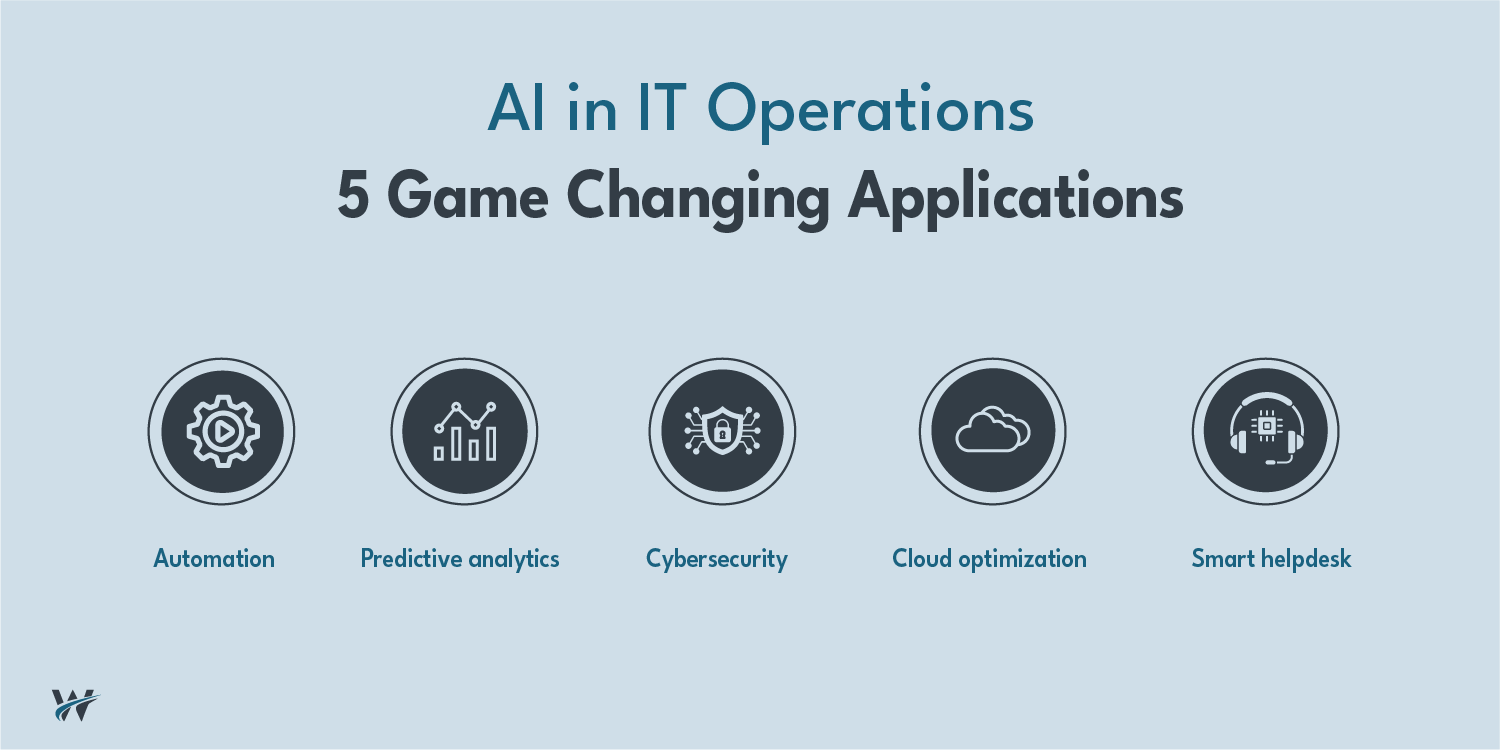
Artificial Intelligence is influencing multiple areas of IT management. The following use cases highlight how AI is driving efficiency and resilience.
1. Predictive Maintenance and Infrastructure Monitoring
Predictive maintenance is one of the most impactful AI applications in IT operations.
Traditional monitoring systems trigger alerts only after performance thresholds are exceeded. AI powered monitoring systems analyze historical data and detect patterns that indicate potential system failures.
These systems can identify:
By predicting problems before they occur, AI allows IT teams to resolve issues proactively and prevent costly downtime.
Predictive monitoring platforms often integrate with cloud services such as Microsoft Azure to provide real time infrastructure insights.
2. Intelligent Helpdesk and Automated IT Support
IT support teams frequently handle repetitive requests such as password resets, access permissions, and software troubleshooting.
AI powered chatbots and virtual assistants can automate many of these tasks.
For example, AI driven helpdesk systems can:
These intelligent support systems reduce response times while allowing IT professionals to focus on complex technical challenges.
3. Cybersecurity Threat Detection and Prevention
Cybersecurity threats are increasing in sophistication and frequency. Manual security monitoring cannot keep up with the volume of threats targeting modern organizations.
AI powered cybersecurity systems analyze network behavior and detect unusual patterns that may indicate malicious activity.
Machine learning algorithms can identify:
Advanced threat detection tools often integrate with enterprise security platforms and identity systems within environments such as Microsoft 365.
AI driven security monitoring allows organizations to respond to threats in real time and significantly reduce breach risks.
4. Cloud Cost Optimization
Cloud computing provides scalability and flexibility, but without proper monitoring, costs can escalate quickly.
AI tools analyze cloud usage patterns to identify inefficiencies and unnecessary spending.
These systems can recommend:
Cloud cost optimization ensures organizations maximize value from platforms such as Amazon Web Services while maintaining performance standards.
5. Data Driven Decision Making
Modern IT operations generate massive volumes of data. AI analytics platforms transform this data into actionable insights.
With better data visibility, technology leaders can make informed decisions that align IT strategy with business goals.
Key Benefits of AI and Automation in IT Services
Organizations adopting AI driven IT operations experience several measurable advantages.
Faster Incident Resolution.
AI monitoring systems identify root causes faster than traditional manual troubleshooting methods. Automated alerts and intelligent diagnostics reduce downtime and improve service reliability.
Reduced Operational Costs
Automation eliminates repetitive tasks and reduces the need for manual intervention. This leads to lower operational costs and improved efficiency.
Improved Risk Management
Predictive analytics and advanced monitoring help organizations detect vulnerabilities and threats early, reducing security risks.
Enhanced User Experience
Employees benefit from faster support responses, improved system performance, and more reliable digital tools.
Greater System Reliability
AI powered monitoring continuously analyzes infrastructure performance, ensuring systems operate at optimal efficiency.
AI does not replace IT professionals. Instead, it enhances their capabilities by automating routine tasks and providing deeper insights.
AI and Automation in IT Service Management
IT Service Management platforms are increasingly integrating AI capabilities.
These intelligent systems can automate tasks such as:
Automation improves response speed while maintaining consistent service quality.
Preparing Your Organization for AI Integration
Implementing AI in IT operations requires strategic planning. Organizations must ensure their infrastructure, data, and workflows are ready for AI powered systems.
Audit Existing IT Infrastructure
Before introducing AI tools, businesses must evaluate their current infrastructure.
This includes reviewing:
A clear understanding of the current environment helps identify opportunities for automation.
Clean and Structure Data
AI systems rely heavily on high quality data. Poor data quality leads to inaccurate insights.
Organizations must ensure data is:
Data governance frameworks are critical for successful AI implementation.
Define Automation Goals
Businesses should identify specific areas where automation will create the greatest impact.
Examples include:
Clearly defined objectives ensure AI projects deliver measurable results.
Align AI Initiatives with Business Strategy
AI implementation should support broader business goals such as improving productivity, reducing costs, enhancing customer experience, or accelerating innovation.
Strategic alignment ensures that AI investments deliver long term value.
Challenges in AI Adoption
While AI offers tremendous benefits, organizations must address several challenges during implementation.
Integration Complexity
AI platforms must integrate with existing IT systems and applications. Proper planning ensures smooth integration.
Data Privacy and Security
Organizations must protect sensitive data used in AI systems while maintaining regulatory compliance.
Skill Gaps
Implementing AI requires expertise in data science, cloud architecture, and machine learning.
Partnering with experienced technology providers can help overcome these challenges.
Why Partner with Wexus Win Works for AI Driven IT Operations
At Wexus Win Works, we help organizations implement practical AI solutions that improve operational efficiency and business performance.
Our services combine AI innovation with enterprise IT expertise.
We offer:
Our approach focuses on real world implementation rather than theoretical experimentation.
By aligning AI solutions with business objectives, we help organizations achieve measurable improvements in performance and efficiency.
The Future of AI in IT Operations
Artificial Intelligence will continue shaping IT operations in the coming years.
Emerging trends include:
Organizations that adopt these technologies early will gain a competitive advantage in efficiency, security, and innovation.
AI Is the Future of IT Operations
Artificial Intelligence is no longer a futuristic concept. It is already transforming modern IT operations.
From predictive maintenance and automated helpdesk systems to advanced cybersecurity monitoring and cloud optimization, AI powered technologies are redefining how businesses manage digital infrastructure.
Organizations that integrate AI driven IT strategies gain several advantages:
The question is no longer whether AI should be adopted. The real question is how quickly organizations can integrate AI into their technology ecosystem.
Businesses that embrace AI today will be the technology leaders of tomorrow.
Ready to Explore AI Driven IT Transformation?
If your organization is ready to modernize its IT operations and leverage the power of AI and automation, Wexus Win Works can help.
Our experts specialize in AI powered IT strategy, cloud infrastructure management, cybersecurity solutions, and enterprise automation.
Connect with Wexus Win Works today and discover how AI driven IT operations can help your business build a smarter, more resilient, and future ready technology environment.