
Published: 16 March 2026, 08:00 PM
Introduction
In today’s technology driven economy, organizations rely heavily on digital systems to manage operations, serve customers, analyze data, and remain competitive. From cloud infrastructure and enterprise software to cybersecurity frameworks and advanced analytics platforms, modern businesses operate within highly complex IT ecosystems. While technology has enabled unprecedented efficiency and innovation, it has also introduced new risks, compliance challenges, and operational complexities.
As companies continue their digital transformation journeys, the need for structured and effective IT governance has become more critical than ever. IT governance ensures that technology investments align with business objectives, resources are used efficiently, and systems remain secure and compliant with regulatory standards.
Without a strong governance framework, organizations often face fragmented systems, inconsistent technology policies, uncontrolled IT spending, and increased exposure to cybersecurity risks. These challenges can lead to operational inefficiencies, compliance issues, and financial losses.
Modern enterprises require a strategic approach to managing technology. IT governance provides the structure, accountability, and oversight necessary to ensure that technology serves as a business enabler rather than a source of risk or inefficiency.
Organizations that adopt well defined governance frameworks gain improved visibility into their technology environment, better control over IT investments, and stronger alignment between IT teams and business leadership.
As digital ecosystems continue to expand and evolve, IT governance has become a foundational pillar for sustainable growth, innovation, and operational resilience.
What Is IT Governance
IT governance refers to the framework of policies, processes, decision making structures, and accountability mechanisms that guide how technology resources are managed within an organization.
The primary purpose of IT governance is to ensure that IT investments support business objectives while maintaining security, regulatory compliance, and operational efficiency. It establishes clear responsibilities for managing technology, defines performance expectations, and provides oversight for technology related risks.
In simple terms, IT governance ensures that the right technology decisions are made, the right resources are allocated, and the right controls are in place to support business goals.
A well structured governance framework helps organizations answer critical questions such as:
Effective IT governance focuses on several key principles that guide decision making across the organization.
Strategic Alignment Between Business and IT
One of the most important objectives of IT governance is to ensure that technology initiatives directly support business goals. IT teams and business leaders must work together to ensure that technology investments drive innovation, improve operational efficiency, and support long term strategic priorities.
Risk Management and Security Oversight
Technology environments face constant threats including cyberattacks, data breaches, system failures, and compliance violations. Governance frameworks ensure that organizations identify, assess, and manage these risks through proper security policies and controls.
Resource Optimization
IT resources include budgets, infrastructure, personnel, and software platforms. Governance ensures that these resources are allocated efficiently and used in ways that maximize value for the organization.
Performance Monitoring
Organizations must measure the effectiveness of their IT systems and technology investments. Governance frameworks include metrics, reporting structures, and performance indicators that track whether IT initiatives are delivering expected outcomes.
Regulatory Compliance
Many industries operate under strict regulatory requirements related to data protection, financial reporting, and operational transparency. IT governance ensures that systems and processes comply with these regulations.
When governance frameworks are implemented correctly, organizations gain greater control over technology spending, improve operational performance, and reduce the risks associated with complex digital environments.
Why IT Governance Matters
The role of technology in modern enterprises continues to grow rapidly. Businesses depend on IT systems for nearly every aspect of operations, from customer engagement and supply chain management to financial reporting and workforce collaboration.
Without proper governance, technology environments can quickly become disorganized, inefficient, and difficult to manage.
Strong IT governance helps organizations address these challenges while enabling sustainable digital growth.
Improved Decision Making
One of the most significant benefits of IT governance is improved decision making. Governance frameworks establish clear processes for evaluating technology investments, approving projects, and prioritizing initiatives.
This ensures that decisions are based on business value, risk assessment, and strategic alignment rather than short term convenience or departmental preferences.
Regulatory Compliance
Regulatory requirements continue to increase across industries. Organizations must comply with data protection laws, cybersecurity standards, and industry specific regulations.
IT governance ensures that systems, policies, and processes are designed to meet compliance requirements and reduce the risk of regulatory penalties.
Reduced Technology Risks
Modern IT environments face numerous risks including cyber threats, system downtime, data loss, and operational disruptions.
Governance frameworks provide structured approaches for identifying and managing these risks. This includes implementing security policies, monitoring system vulnerabilities, and ensuring proper incident response procedures are in place.
Optimized IT Investments
Technology budgets represent a significant portion of operational spending for many organizations. Without governance, companies may invest in redundant systems, underutilized platforms, or outdated technologies.
IT governance ensures that investments are evaluated based on business value, scalability, and long term strategic impact.
Increased Operational Transparency
Governance provides visibility into how technology resources are used and how systems perform. This transparency helps leadership teams understand the impact of IT initiatives and make informed strategic decisions.
Prevention of Technology Sprawl
In many organizations, different departments adopt their own software tools and platforms without centralized oversight. This leads to technology sprawl where multiple systems perform similar functions but do not integrate effectively.
IT governance prevents this fragmentation by standardizing technology adoption and ensuring alignment with enterprise architecture strategies.
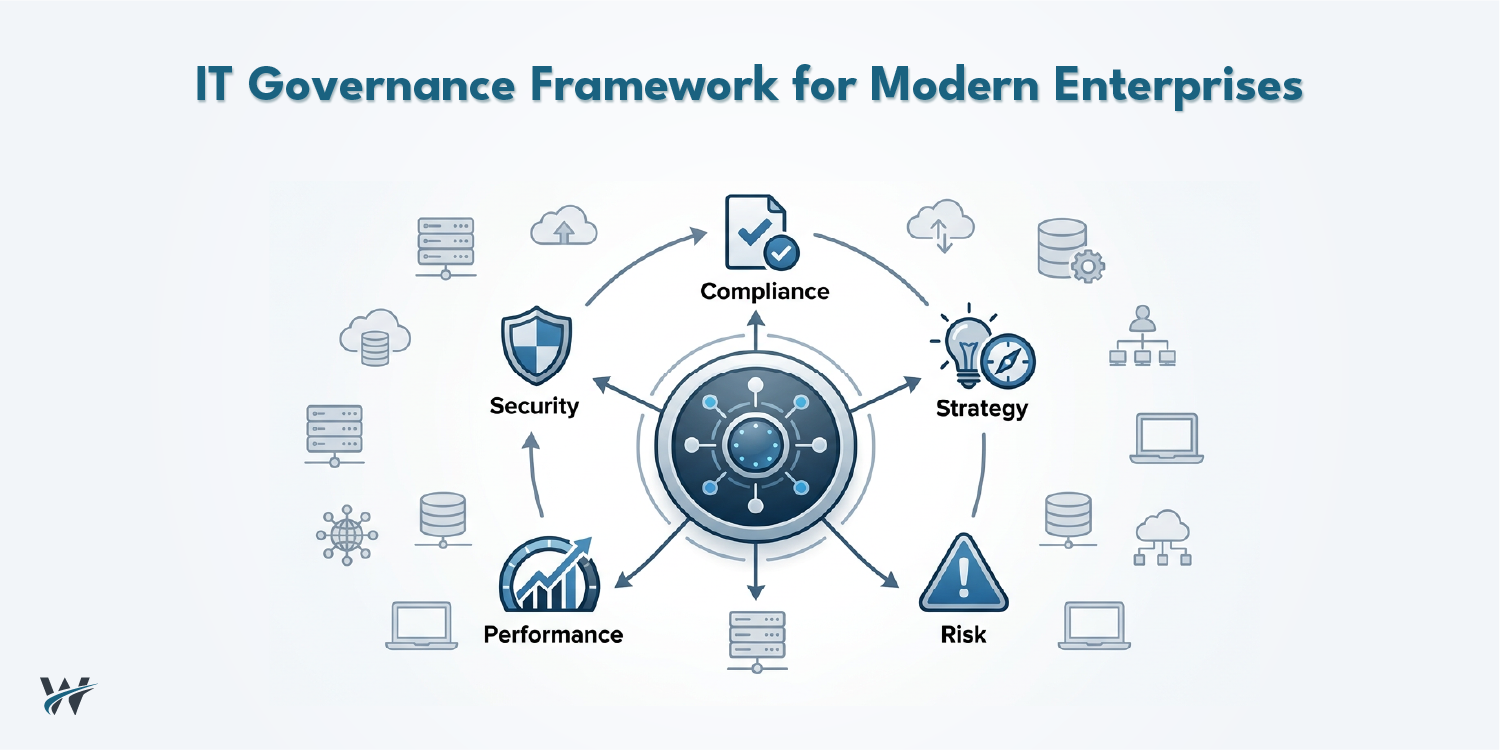
Key Components of Effective IT Governance
Successful IT governance frameworks include several interconnected components that ensure technology is managed strategically and responsibly.
Strategic IT Planning
Strategic planning ensures that technology initiatives support long term business goals.
Organizations must develop technology roadmaps that align with business strategies, market trends, and operational priorities. This planning process involves collaboration between executive leadership, IT teams, and business stakeholders.
A well defined IT strategy ensures that investments in infrastructure, cloud platforms, software solutions, and emerging technologies contribute to overall business growth.
Risk and Compliance Management
Risk management is a central pillar of IT governance.
Organizations must continuously identify potential risks associated with technology systems, including cybersecurity threats, operational disruptions, and regulatory compliance challenges.
Effective governance frameworks include risk assessment procedures, security policies, monitoring systems, and incident response plans.
Compliance management ensures that technology environments adhere to industry regulations and data protection standards.
Performance Measurement
Technology investments must deliver measurable value. Performance measurement frameworks allow organizations to track system performance, project outcomes, and return on investment.
Key performance indicators may include system uptime, response times, user adoption rates, cybersecurity incident metrics, and cost efficiency measures.
Regular reporting and performance analysis help leadership teams evaluate the effectiveness of IT initiatives and identify opportunities for improvement.
Resource Management
IT governance ensures that technology resources are allocated efficiently across the organization.
This includes managing budgets, infrastructure, human resources, and vendor relationships. Effective resource management prevents wasteful spending and ensures that critical projects receive the support they need.
Organizations must also evaluate technology lifecycle management to ensure systems are upgraded or replaced when necessary.
Policy Development and Standardization
Governance frameworks require clear policies and standards that guide technology usage across the organization.
These policies may include cybersecurity protocols, access control procedures, data management guidelines, and software procurement standards.
Standardization helps maintain consistency across systems and ensures that employees follow best practices when interacting with technology.
How Wexus Win Works Supports IT Governance
Implementing an effective IT governance framework requires expertise, strategic planning, and deep understanding of both technology and business operations.
Wexus Win Works supports organizations in building strong governance structures that align technology investments with long term strategic goals.
Our consulting approach focuses on helping businesses design governance frameworks that improve operational efficiency, strengthen security, and enable sustainable digital growth.
IT Strategy Consulting
Wexus Win Works helps organizations develop comprehensive IT strategies that align technology initiatives with business objectives.
This includes technology roadmapping, digital transformation planning, and strategic technology assessments.
Technology Risk Assessments
Our experts evaluate existing technology environments to identify potential risks, vulnerabilities, and operational inefficiencies.
These assessments help organizations implement proactive risk management strategies that protect critical systems and data assets.
Compliance and Regulatory Guidance
Navigating complex regulatory environments can be challenging for many organizations.
Wexus Win Works provides guidance on compliance frameworks, industry standards, and data protection regulations to ensure organizations meet their legal and operational obligations.
Infrastructure Optimization
Many organizations operate with outdated or inefficient IT infrastructure.
Our specialists help businesses optimize infrastructure by improving system performance, reducing operational costs, and enhancing scalability.
Security Governance Implementation
Cybersecurity threats continue to evolve rapidly.
Wexus Win Works helps organizations implement governance driven security strategies that include policy development, monitoring systems, and incident response planning.
Through a structured governance approach, businesses can strengthen their security posture and protect critical digital assets.
Conclusion
As organizations continue to expand their digital capabilities, managing technology environments becomes increasingly complex.
Cloud platforms, enterprise applications, remote collaboration tools, and advanced analytics systems all contribute to the growing scale of modern IT ecosystems. Without proper governance, these systems can quickly become difficult to manage and vulnerable to operational and security risks.
IT governance provides the structure and oversight necessary to ensure that technology investments support business objectives while maintaining compliance, security, and operational efficiency.
Organizations that invest in strong governance frameworks gain better visibility into their technology landscape, improve decision making processes, and maximize the value of their IT investments.
In an era where technology drives innovation and competitive advantage, effective IT governance is no longer optional. It is a strategic necessity for organizations seeking sustainable growth and long term success.
Call to Action
Connect with Wexus Win Works to design a governance strategy that ensures your IT infrastructure supports long term business success while enabling secure and efficient digital transformation.