
Published: 27 May 2026, 09:00PM
Introduction
Federal contracting offers tremendous growth opportunities for businesses across IT services, cybersecurity, cloud computing, staffing, engineering, healthcare, and professional consulting industries. Government agencies continue to invest heavily in modernization initiatives, digital transformation, AI adoption, infrastructure upgrades, and mission-critical support services.
However, competing for federal contracts is highly complex. Organizations must navigate detailed Request for Proposal (RFP) requirements, strict compliance standards, extensive documentation, and aggressive submission timelines. Proposal development often requires coordination across business development teams, technical experts, pricing specialists, contract managers, and executive leadership.
Without a structured process, proposal development can quickly become disorganized, inefficient, and error-prone. Missed deadlines, compliance gaps, inconsistent messaging, and poor formatting can significantly reduce win probability.
This is where Proposal Management Services become essential.
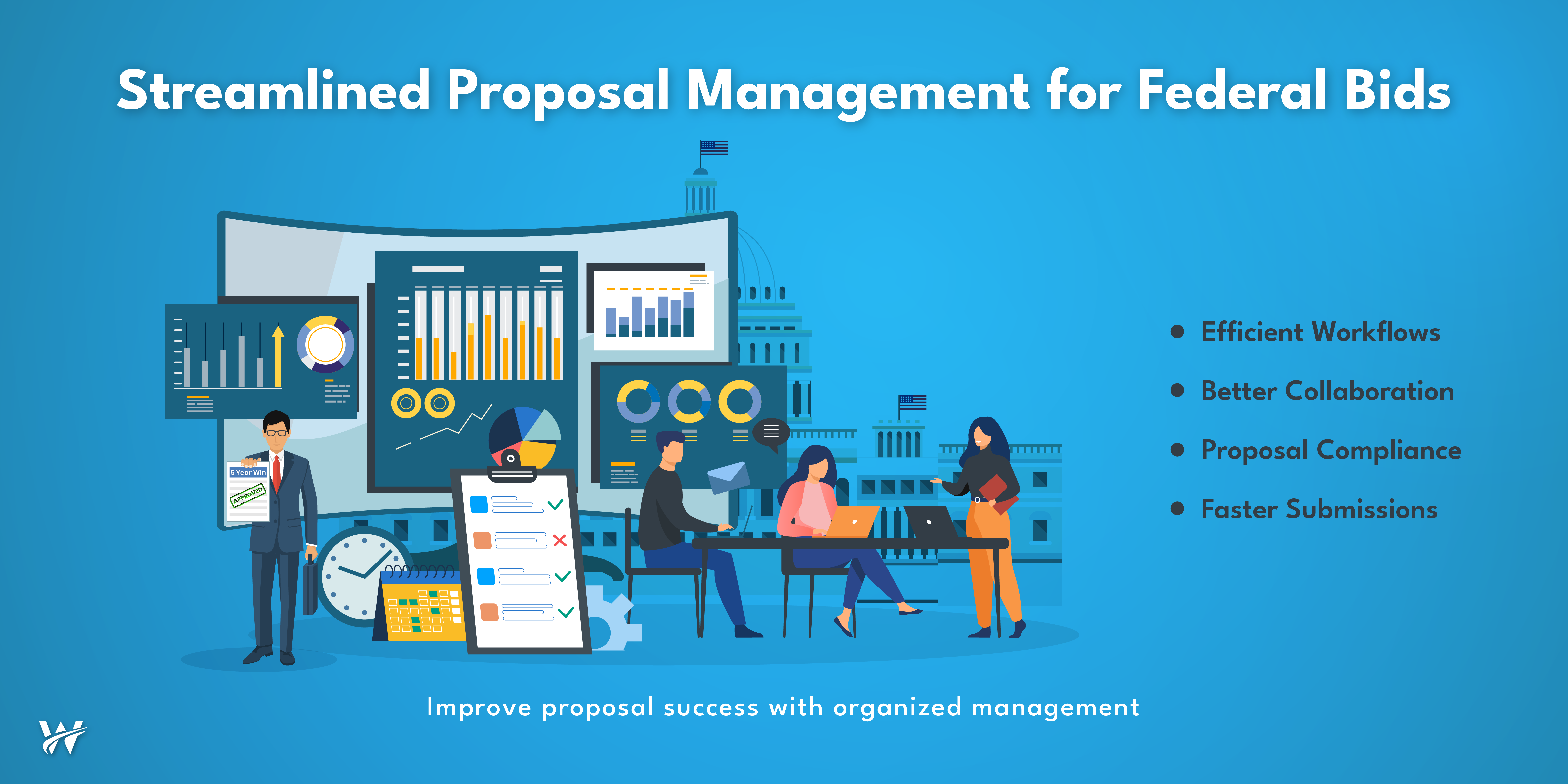
Proposal management services help organizations streamline proposal workflows, improve collaboration, maintain compliance, and deliver high-quality federal proposals on time. By implementing structured proposal processes, businesses can improve efficiency, reduce operational stress, and increase competitiveness in the federal marketplace.
In today’s highly competitive government contracting environment, organizations that invest in professional proposal management gain a strategic advantage by improving proposal quality, accelerating response times, and enhancing overall capture success.
What Are Proposal Management Services?
Proposal Management Services coordinate and manage the complete proposal lifecycle for federal and government contracting opportunities. These services provide structured oversight, organization, and execution support throughout the proposal development process.
Proposal managers serve as the central point of coordination between internal stakeholders, subject matter experts, capture teams, pricing teams, writers, reviewers, and executive leadership.
Their goal is to ensure that every proposal is compliant, compelling, well-organized, and submitted accurately before the deadline.
Proposal management services typically include:
Professional proposal management creates consistency and accountability throughout the proposal lifecycle, helping organizations avoid costly mistakes and improve overall proposal quality.
For federal contractors, proposal management is especially important because government agencies evaluate proposals based on strict criteria that include technical capability, past performance, pricing, management approach, and compliance with solicitation instructions.
Even highly qualified businesses can lose contracts if proposals are poorly organized or fail to address mandatory requirements.
Why Federal Proposal Responses Are Challenging
Federal proposals are significantly more complex than commercial business proposals. Government agencies often issue highly detailed solicitations with strict formatting rules, evaluation criteria, and compliance requirements.
Proposal teams must carefully analyze every section of the solicitation to ensure all requirements are addressed properly.
Common challenges include:
Complex Compliance Requirements
Federal RFPs often contain hundreds of requirements spread across multiple sections, attachments, and amendments. Missing even a single requirement can negatively impact proposal scoring or lead to disqualification.
Proposal managers help teams maintain compliance matrices and track every requirement throughout the development process.
Tight Deadlines
Government proposal timelines are frequently aggressive. Teams may have only a few weeks to prepare technical responses, pricing documentation, staffing plans, management approaches, and supporting materials.
Without proper scheduling and coordination, proposal teams can quickly fall behind.
Multiple Contributors
Federal proposals often involve collaboration between numerous departments and external partners. Subject matter experts, technical architects, pricing specialists, HR teams, legal advisors, and subcontractors all contribute content.
Proposal management services help centralize communication and maintain consistency across all sections.
Frequent Solicitation Amendments
Government agencies regularly release amendments that modify requirements, deadlines, or evaluation criteria. Proposal teams must track these changes carefully and update proposal content accordingly.
High Competition
Federal opportunities can attract dozens or even hundreds of competitors. Agencies evaluate proposals carefully, making proposal quality and compliance critical differentiators.
Benefits of Proposal Management Services
Organizations that invest in professional proposal management services experience substantial operational and competitive advantages.
One of the biggest benefits of proposal management services is improved operational efficiency.
Structured workflows eliminate confusion, reduce duplication of effort, and streamline communication between teams. Proposal managers establish clear timelines, assign responsibilities, and monitor progress throughout the proposal lifecycle.
This organized approach allows teams to focus more on developing winning content instead of managing administrative chaos.
Improved efficiency also helps businesses respond to more opportunities without overwhelming internal resources.
Federal proposal development requires strong collaboration between multiple stakeholders. Without centralized coordination, communication breakdowns can delay progress and create inconsistencies.
Proposal management services improve collaboration by:
Improved collaboration ensures all contributors remain aligned with proposal objectives, timelines, and compliance requirements.
Compliance is one of the most important aspects of federal proposal development.
Government agencies expect proposals to follow exact instructions related to formatting, page limits, section organization, technical requirements, certifications, and submission procedures.
Proposal managers use compliance matrices, checklists, and review processes to ensure every requirement is addressed properly.
Strong compliance control reduces the risk of proposal rejection and improves evaluator confidence.
Professional proposal management significantly improves proposal quality.
Proposal managers ensure content is:
High-quality proposals create a stronger professional impression and improve readability for evaluators.
Well-organized proposals also help agencies quickly identify strengths, capabilities, and differentiators.
Organizations with mature proposal management processes can respond to opportunities much faster.
Reusable templates, standardized workflows, content libraries, and organized review cycles reduce development time and improve agility.
Faster response capabilities are particularly important for task orders, IDIQ contracts, and rapid-response procurement opportunities.
Proposal development involves many moving parts, and errors can create significant risks.
Proposal management services reduce risks associated with:
Risk reduction improves overall proposal reliability and submission confidence.
Ultimately, proposal management services help organizations increase their probability of winning contracts.
Better organization, stronger compliance, improved collaboration, and higher proposal quality all contribute to more competitive submissions.
Winning more contracts creates long-term revenue growth and strengthens positioning within the federal marketplace.
Key Components of Effective Proposal Management
Successful proposal management requires structured processes and disciplined execution.
Below are the key components of effective proposal management services.
Proposal Scheduling
Proposal scheduling is the foundation of successful proposal development.
Proposal managers create detailed schedules that define:
Clear scheduling helps teams stay aligned and ensures adequate time for writing, reviews, revisions, and final production.
Strong scheduling also allows organizations to identify risks early and make adjustments before delays become critical.
Content Management
Effective content management improves both efficiency and consistency.
Proposal management services help organizations maintain centralized repositories of reusable proposal materials, including:
Reusable content libraries accelerate proposal development and improve consistency across submissions.
Content management systems also help organizations maintain updated and approved materials for future opportunities.
Compliance Tracking
Compliance tracking is critical for federal proposal success.
Proposal managers develop compliance matrices that map solicitation requirements to proposal sections. This ensures every requirement is addressed appropriately.
Compliance tracking includes:
Strong compliance management reduces the likelihood of overlooked requirements.
Review Cycles
Structured review cycles improve proposal quality and accuracy.
Professional proposal management typically includes multiple review stages such as:
Pink Team Review
Evaluates proposal structure, strategy, and initial content development.
Red Team Review
Provides comprehensive evaluation from the perspective of government evaluators.
Gold Team Review
Focuses on executive-level approval and final strategic alignment.
Final Quality Review
Ensures formatting consistency, grammar accuracy, compliance validation, and submission readiness.
Structured reviews help identify weaknesses before submission.
Graphics Coordination
Visual presentation plays an important role in proposal readability.
Proposal managers coordinate graphics development to support technical concepts, workflows, timelines, and organizational structures.
Professional graphics improve evaluator engagement and help communicate complex information more effectively.
Version Control
Version control prevents confusion during collaborative proposal development.
Proposal managers establish clear file naming conventions, document repositories, and editing procedures to maintain accuracy throughout the proposal lifecycle.
Strong version control minimizes duplicate work and reduces the risk of outdated content appearing in final submissions.
Submission Readiness
Final proposal submission requires careful coordination.
Proposal managers ensure all materials meet solicitation requirements before submission, including:
Submission readiness reduces last-minute stress and minimizes submission risks.
The Role of Technology in Proposal Management
Modern proposal management increasingly relies on technology platforms and automation tools.
Proposal management software helps organizations streamline workflows through:
Cloud-based collaboration tools also improve communication between distributed teams and subcontractors.
Technology enhances proposal efficiency while reducing administrative burdens.
Organizations that combine experienced proposal management professionals with modern proposal technologies often achieve the best results.
Proposal Management for IT and Federal Contractors
IT companies pursuing federal opportunities face especially demanding proposal environments.
Government agencies require detailed responses related to:
Proposal management services help IT contractors organize complex technical content into clear, evaluator-friendly proposals.
This is especially important for contractors supporting agencies in areas such as:
Strong proposal management helps technical organizations communicate value effectively while maintaining compliance with government procurement requirements.
Best Practices for Successful Proposal Management
Organizations can improve proposal outcomes by following several proposal management best practices.
Start Early
Successful proposal development begins long before the RFP deadline.
Early planning provides more time for strategy development, content refinement, and review cycles.
Maintain Proposal Templates
Reusable templates accelerate development and improve consistency.
Templates should be regularly updated to reflect current branding, capabilities, and compliance requirements.
Build Content Libraries
Maintaining approved reusable content reduces proposal development time and improves quality.
Conduct Regular Reviews
Structured reviews identify weaknesses early and improve proposal competitiveness.
Prioritize Compliance
Compliance should remain a top priority throughout proposal development.
Invest in Training
Proposal teams benefit from continuous training on federal procurement regulations, proposal writing techniques, and collaboration tools.
Conclusion
Federal proposal development is a complex and highly competitive process that requires careful planning, coordination, compliance management, and quality control.
Proposal Management Services help organizations streamline proposal workflows, improve collaboration, reduce errors, and increase submission quality. By implementing structured proposal management processes, businesses can respond to opportunities more efficiently while improving competitiveness in the federal marketplace.
As federal agencies continue investing in IT modernization, cybersecurity, cloud services, AI, and digital transformation initiatives, organizations with strong proposal management capabilities will be better positioned to win government contracts and achieve long-term growth.
Businesses that prioritize proposal management not only improve operational efficiency but also strengthen their ability to deliver compelling, compliant, and high-quality federal proposals.
Call to Action
Looking to improve your federal proposal process and increase win rates?
Our Proposal Management Services help businesses streamline bid responses, strengthen compliance management, and deliver high-quality federal proposals on time.
Contact us today to optimize your proposal operations and compete more effectively in the government contracting marketplace.