
Introduction
A proposal submission is more than a final deliverable—it is an opportunity to learn, improve, and strengthen future proposal performance. Whether a proposal results in a contract win or a loss, organizations that analyze their process gain valuable insights that can improve future outcomes.
High-performing proposal teams understand that continuous improvement is essential in competitive environments. By conducting structured proposal lessons learned reviews, organizations can identify what worked, what did not, and what changes are needed to create stronger, more effective submissions.
A well-executed lessons learned process transforms every proposal experience into a strategic advantage, helping teams improve efficiency, enhance collaboration, reduce mistakes, and increase long-term win potential.
What Is a Proposal Lessons Learned Review?
A proposal lessons learned review is a structured evaluation conducted after a proposal submission to analyze the overall proposal development process. The goal is to capture insights, identify improvement areas, and create actionable recommendations for future opportunities.
Unlike a simple post-mortem discussion, a lessons learned review focuses on process improvement rather than assigning blame. It provides proposal teams with a clear understanding of their strengths and weaknesses across the entire proposal lifecycle.
A comprehensive review evaluates areas such as planning, content development, compliance, team coordination, production, and submission management. The findings can then be used to refine proposal strategies, update internal processes, and improve future proposal execution.
Why Proposal Lessons Learned Reviews Matter
Every proposal contains valuable information that can help organizations become more competitive. Without a formal review process, teams may repeat the same challenges, overlook improvement opportunities, or lose valuable knowledge when team members move between projects.
Lessons learned reviews help organizations:
For organizations managing multiple proposals throughout the year, these reviews become a critical part of developing a mature proposal management process.
Key Areas to Evaluate During a Proposal Review
The planning phase establishes the foundation for proposal success. A lessons learned review should examine whether the proposal team had sufficient time, resources, and direction before beginning development.
Key questions include:
Poor planning often creates unnecessary pressure later in the proposal process. Reviewing the planning stage helps organizations improve scheduling, resource allocation, and proposal strategy for future opportunities.
Strong proposal content requires clear messaging, technical accuracy, and alignment with customer requirements. Reviewing content development helps teams understand which sections performed well and where improvements are needed.
Organizations should evaluate:
A well-maintained proposal content library can significantly improve efficiency by allowing teams to reuse proven content while customizing responses for each opportunity.
Lessons learned reviews can identify gaps in existing content libraries and highlight areas where new templates, case studies, or technical materials should be developed.
Compliance is one of the most critical factors in proposal success. Even strong technical solutions can fail if mandatory requirements are missed.
A proposal lessons learned review should examine:
Organizations can improve future submissions by strengthening their proposal compliance management processes and implementing structured compliance checklists.
Proposal development typically involves multiple teams, including technical experts, project managers, executives, writers, and reviewers. Effective communication is essential for keeping everyone aligned.
During the review, teams should discuss:
Improving collaboration reduces delays, minimizes confusion, and creates a more organized proposal development environment.
The final production stage is where many avoidable issues can occur. A lessons learned review should evaluate the final steps of proposal preparation.
Important considerations include:
Strong production processes help ensure that a high-quality proposal is submitted accurately and professionally.
How to Conduct an Effective Proposal Lessons Learned Review
To maximize value, organizations should approach lessons learned reviews with a structured process.
Conduct the Review Shortly After Submission
The best time to conduct a review is usually within one week after submission. Team members can still remember challenges, decisions, and improvement opportunities clearly.
Waiting too long may result in important details being forgotten.
Include Key Contributors
A successful review should include representatives from all major areas involved in proposal development, including:
Different perspectives help create a complete understanding of the proposal process.
Focus on Actionable Improvements
The purpose of a lessons learned review is not simply to document problems. Teams should identify specific actions that can improve future proposals.
Examples include:
Each improvement should have an assigned owner to ensure accountability.
Update Proposal Resources
Lessons learned should directly improve future proposal efforts. Organizations should use review findings to update:
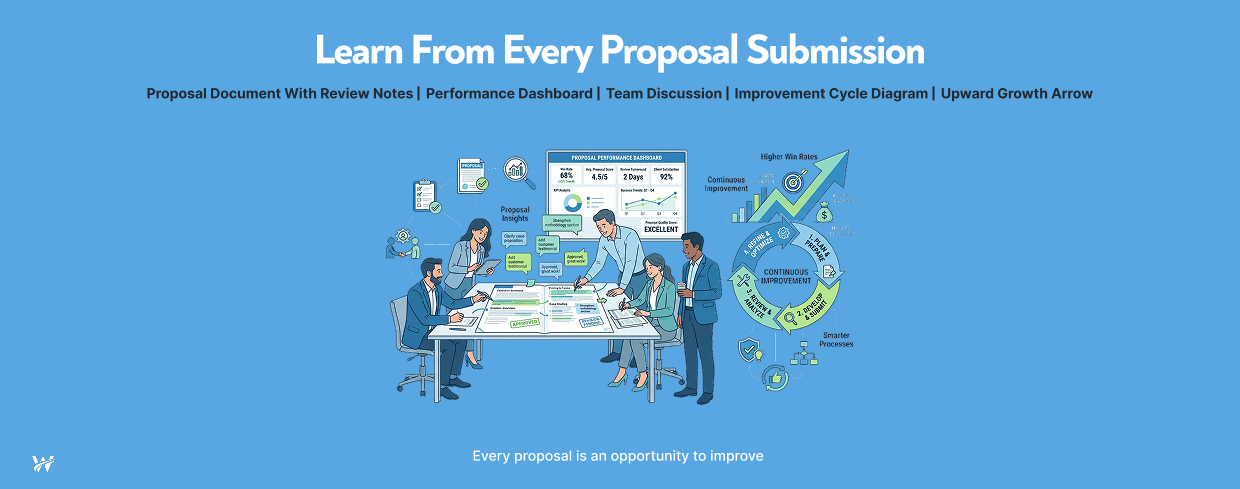
This creates a continuous improvement cycle where every proposal strengthens future performance.
Turning Lessons Learned into a Competitive Advantage
Organizations that consistently apply lessons learned gain a significant advantage in competitive proposal environments.
Over time, these reviews help teams develop:
A mature proposal organization does not view each submission as an isolated event. Instead, every proposal becomes an opportunity to build knowledge, refine processes, and improve future success.
Conclusion
A proposal submission should not be the end of the process—it should be the beginning of improvement. By conducting structured proposal lessons learned reviews, organizations can identify opportunities, eliminate recurring challenges, and continuously strengthen their proposal approach.
Successful proposal teams learn from every experience, whether they win or lose. By transforming insights into action, organizations can create more competitive submissions, improve operational efficiency, and increase their chances of long-term success.
Call to action
Want to improve your proposal development process and increase your chances of winning competitive opportunities?
Wexus Win Works provides expert proposal management, capture support, and strategic consulting services to help organizations create stronger, compliant, and more competitive proposals. Contact us today to transform every proposal experience into a future advantage.