
Introduction
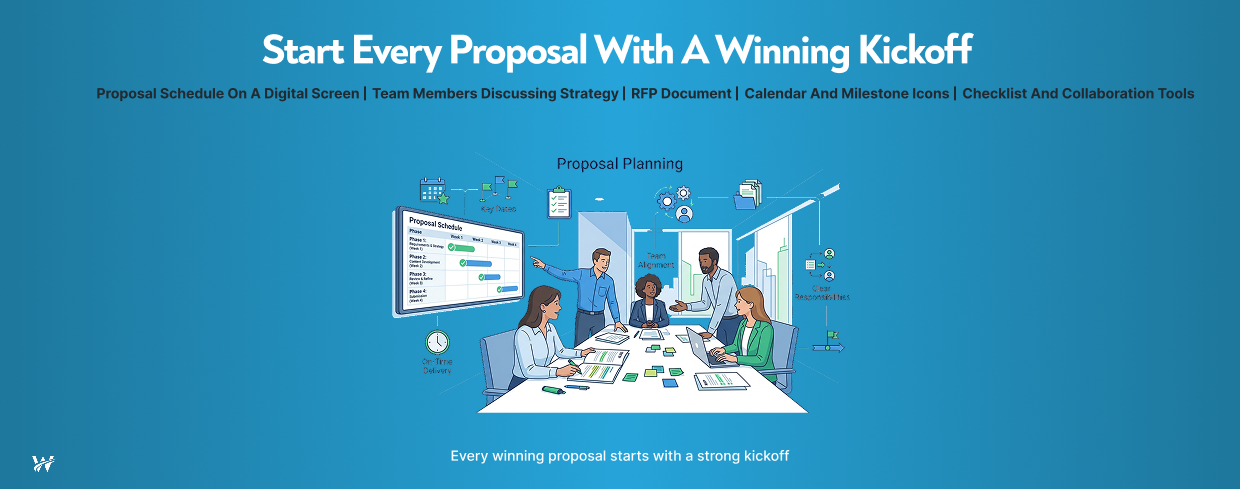
Winning a contract starts long before the first proposal section is written. While proposal writing often receives the most attention, the foundation of a successful submission is established during the proposal kickoff meeting. This initial meeting aligns stakeholders, clarifies objectives, defines responsibilities, and creates a structured roadmap that guides the proposal team from planning through submission.
Organizations that consistently win competitive bids understand that a well-executed kickoff meeting minimizes confusion, improves collaboration, reduces costly revisions, and ensures every team member understands the customer's expectations. Whether responding to government solicitations, commercial RFPs, or enterprise procurement opportunities, investing time in a structured kickoff meeting significantly increases the likelihood of delivering a compliant, persuasive, and high-quality proposal.
In today's competitive procurement landscape, where deadlines are tight and proposal requirements are increasingly complex, effective proposal management begins with proper planning. A successful kickoff meeting establishes clear communication, aligns the proposal strategy with business objectives, and ensures every contributor understands their role in achieving a winning outcome.
What Is a Proposal Kickoff Meeting?
A proposal kickoff meeting is the official launch of the proposal development process after an opportunity has been qualified and a bid decision has been made. It serves as the central planning session where all key stakeholders come together to review the opportunity, discuss the solicitation, establish timelines, assign responsibilities, and align on the overall proposal strategy.
Participants typically include:
Rather than simply discussing administrative tasks, the kickoff meeting creates a shared understanding of the customer's needs and defines how the organization will present its solution effectively.
A successful kickoff meeting ensures every contributor begins the proposal process with the same expectations, priorities, and timeline.
Why Proposal Kickoff Meetings Matter
Many proposal teams underestimate the importance of planning. Without a structured kickoff meeting, projects often experience:
A formal kickoff meeting helps eliminate these challenges by providing direction from the very beginning.
Organizations that consistently conduct structured kickoff meetings often experience:
The kickoff meeting establishes accountability while ensuring every contributor understands how their work supports the overall proposal strategy.
Key Objectives of a Successful Proposal Kickoff Meeting
Every proposal begins with understanding the customer's requirements.
The kickoff meeting should include a comprehensive review of the Request for Proposal (RFP), Request for Quotation (RFQ), Invitation for Bid (IFB), or other solicitation documents.
Topics should include:
Reviewing these documents together reduces the risk of misunderstanding customer expectations.
A proposal team cannot create a winning response without first understanding exactly what the customer has requested.
Proposal development involves contributions from multiple departments.
The kickoff meeting should clearly define ownership for every section of the proposal.
Typical assignments include:
Each contributor should understand:
Clearly assigned ownership prevents confusion and improves accountability throughout the proposal lifecycle.
One of the most valuable outcomes of a kickoff meeting is creating a realistic proposal schedule.
Rather than focusing only on the final submission date, successful proposal managers build detailed milestone schedules.
These milestones often include:
Internal deadlines should always occur before customer deadlines to provide adequate time for revisions and quality assurance.
A detailed schedule keeps the proposal team on track while reducing last-minute stress.
Every proposal should communicate why the customer should choose your organization over competitors.
The kickoff meeting is the ideal opportunity to discuss the overall win strategy.
Topics may include:
Instead of writing independent sections, every contributor should reinforce the same strategic themes throughout the proposal.
Consistency strengthens the proposal narrative and creates a more compelling customer experience.
Proposal risks rarely disappear on their own.
The kickoff meeting should encourage open discussion about potential challenges before writing begins.
Examples include:
Identifying these issues early allows proposal managers to develop mitigation plans before they become critical problems.
Proposal Kickoff Meeting Agenda
A structured agenda helps keep the meeting focused and productive.
A typical proposal kickoff agenda includes:
Opportunity Overview
Review the customer, procurement history, opportunity size, and strategic importance.
Customer Background
Discuss customer goals, organizational priorities, procurement objectives, and known challenges.
Solicitation Review
Highlight key RFP requirements, submission instructions, evaluation factors, and compliance expectations.
Proposal Strategy
Review win themes, differentiators, customer benefits, and competitive positioning.
Proposal Schedule
Present milestone dates, review cycles, production timeline, and submission plans.
Assign Responsibilities
Confirm section ownership and deliverable expectations.
Communication Plan
Discuss meeting cadence, collaboration tools, document management, and issue escalation procedures.
Questions and Action Items
Capture open questions and assign follow-up responsibilities.
Proposal Kickoff Best Practices
A successful kickoff meeting requires preparation, structure, and follow-through.
Share the RFP in Advance
Every participant should receive the solicitation before the meeting.
Providing advance access allows contributors to:
The kickoff meeting should focus on strategy rather than introducing the document for the first time.
Develop a Compliance Matrix
A compliance matrix maps every customer requirement to the proposal response.
It helps proposal teams ensure:
The compliance matrix becomes one of the most valuable project management tools during proposal development.
Confirm Communication Channels
Large proposal teams often include contributors working from different departments or locations.
The kickoff meeting should establish:
Consistent communication reduces confusion and improves collaboration.
Set Realistic Internal Deadlines
Waiting until the customer deadline creates unnecessary risk.
Successful proposal managers establish internal deadlines that provide sufficient time for:
Building schedule flexibility reduces stress while improving proposal quality.
Document Action Items
Every kickoff meeting should conclude with documented action items.
These should include:
Publishing meeting notes shortly after the kickoff ensures everyone remains aligned.
Common Mistakes to Avoid
Even experienced proposal teams can undermine their success by making avoidable mistakes during the kickoff meeting.
Common pitfalls include:
Skipping Detailed RFP Review
Assuming everyone has interpreted the solicitation correctly often leads to compliance issues later.
Unclear Ownership
Without defined responsibilities, sections may be duplicated—or worse, overlooked entirely.
Unrealistic Timelines
Overly aggressive schedules can result in rushed writing, limited reviews, and increased errors.
Ignoring Customer Priorities
Focusing solely on company capabilities instead of customer needs weakens proposal messaging.
Lack of Executive Engagement
Leadership involvement helps remove roadblocks, allocate resources, and reinforce the importance of the opportunity.
Poor Documentation
Failing to record decisions, deadlines, and action items can create confusion as the proposal progresses.
Avoiding these mistakes helps proposal teams maintain momentum and produce stronger, more competitive submissions.
Technology That Supports Proposal Kickoff Success
Modern proposal teams increasingly use technology to improve collaboration and streamline proposal development.
Useful tools include:
These technologies help distributed teams remain organized, improve visibility into progress, and reduce administrative overhead throughout the proposal lifecycle.
Conclusion
A proposal kickoff meeting is far more than a project introduction—it is the strategic foundation upon which every successful proposal is built. By reviewing the solicitation, assigning clear responsibilities, establishing realistic schedules, aligning on the win strategy, and identifying risks early, organizations create an environment where proposal teams can work efficiently and confidently.
When conducted effectively, kickoff meetings improve communication, enhance collaboration, reduce rework, and ensure every contributor is focused on delivering a compliant, customer-focused proposal. In today's competitive bidding environment, organizations that prioritize structured proposal planning are better positioned to produce high-quality submissions that stand out and increase their chances of winning valuable contracts.
Call to Action
A winning proposal starts with a winning plan. At Wexus Win Works, we help organizations build structured proposal management processes that improve collaboration, strengthen compliance, and increase proposal quality. From proposal kickoff planning and capture strategy to proposal development and final submission, our experienced team supports every stage of the proposal lifecycle.
Contact Wexus Win Works today to discover how our proposal management services can help your organization deliver stronger proposals and achieve higher win rates.