
Published: 06 April 2026, 09:00 PM
Introduction
Microsoft licensing is a critical part of modern business operations. From Microsoft 365 and Azure to enterprise applications like Dynamics and Power Platform, organizations rely heavily on Microsoft solutions to drive productivity, collaboration, and innovation. However, many businesses unknowingly overspend on licensing due to poor visibility, incorrect plan selection, and lack of ongoing management.
In today’s cost-conscious business environment, even small inefficiencies in software licensing can lead to significant financial losses over time. Companies often purchase licenses in bulk without fully understanding usage patterns, resulting in unused subscriptions, redundant tools, and unnecessary upgrades.
Microsoft licensing optimization is the process of aligning your software investments with actual business needs. It ensures that you are not only reducing unnecessary costs but also maximizing the value of your IT investments. By taking a strategic approach to licensing, businesses can improve operational efficiency, enhance productivity, and achieve better return on investment.
This blog will explore common licensing mistakes, practical optimization strategies, key benefits, and how expert support like Wexus Win Works can help you take control of your Microsoft licensing.
Understanding Microsoft Licensing Complexity
Microsoft offers a wide range of licensing options tailored to different business sizes, industries, and use cases. While this flexibility is beneficial, it also introduces complexity.
Organizations often deal with multiple licensing models, including:
Each of these models comes with its own pricing structure, features, and limitations. Without a clear understanding, businesses may end up:
This complexity makes it essential for businesses to regularly evaluate and optimize their licensing strategy.
Common Licensing Mistakes
Many organizations fall into similar traps when managing Microsoft licenses. These mistakes often go unnoticed but can significantly impact IT budgets.
One of the most common issues is over-licensing. Businesses often choose premium plans assuming they will need all features. In reality, many employees only use basic functionalities like email, document editing, and collaboration.
For example:
This leads to inflated costs without delivering proportional value.
Employee turnover, role changes, and project completions often result in unused licenses. If these licenses are not reassigned or removed, businesses continue paying for them unnecessarily.
Common scenarios include:
Without proper tracking, these inactive licenses accumulate over time and increase costs.
Many organizations do not have clear insights into how Microsoft tools are being used. Without usage data, it becomes difficult to:
Make informed decisions about upgrades or downgrades
This lack of visibility often leads to guesswork in licensing decisions, which results in inefficiencies.
Microsoft licensing is not a one-time decision. Business needs evolve, and licensing should evolve with them. However, many companies fail to conduct regular reviews.
As a result:
Regular audits are essential to maintain cost efficiency and relevance.
Organizations sometimes invest in multiple tools that perform similar functions.
For example:
This duplication increases costs and reduces the value of existing Microsoft investments.
How to Optimize Microsoft Licensing
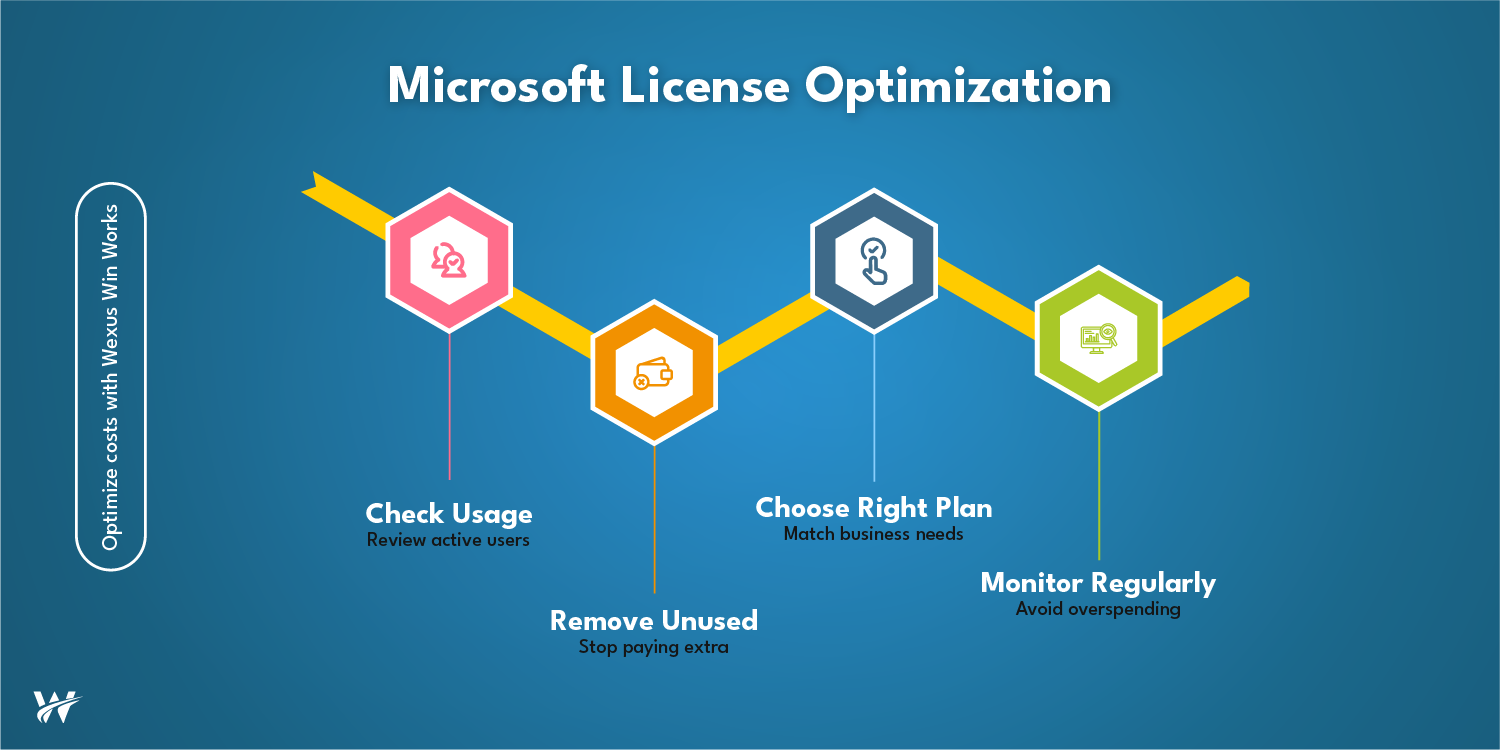
Optimizing Microsoft licensing requires a structured and strategic approach. Below are key steps businesses should follow to ensure cost efficiency and effectiveness.
The first step in optimization is understanding how licenses are being used across the organization.
Key actions include:
This data-driven approach helps organizations align licenses with actual needs rather than assumptions.
For example:
Usage analysis provides the foundation for all optimization efforts.
Once unused or inactive licenses are identified, the next step is to eliminate them.
Best practices include:
By removing unnecessary licenses, businesses can achieve immediate cost savings.
Selecting the appropriate licensing plan is crucial for optimization.
Organizations should:
For instance:
A tailored approach ensures that each user gets the right tools without overspending.
Licensing optimization is an ongoing process, not a one-time task.
Regular monitoring helps:
Organizations should conduct:
This proactive approach ensures long-term optimization and sustainability.
Microsoft provides several tools that can help organizations manage and optimize licensing.
Examples include:
These tools provide valuable insights into:
Using these insights, businesses can make informed decisions and improve efficiency.
Licensing decisions should not be made in isolation. They should align with overall business objectives.
Considerations include:
By aligning licensing with strategic goals, businesses can ensure long-term value and efficiency.
Benefits of Microsoft Licensing Optimization
Optimizing Microsoft licensing offers several tangible and intangible benefits that directly impact business performance.
Reduced IT Costs
The most immediate benefit is cost reduction. By eliminating unused licenses and choosing the right plans, businesses can significantly lower their IT expenses.
Even small adjustments can result in substantial savings over time.
Better Resource Utilization
Optimization ensures that licenses are used effectively. Employees get access to tools they actually need, which improves productivity and reduces waste.
Improved Return on Investment
When licensing aligns with usage, businesses get maximum value from their Microsoft investments. This leads to higher ROI and better financial efficiency.
Simplified License Management
A well-optimized licensing structure is easier to manage. It reduces complexity and improves visibility, making it easier for IT teams to maintain control.
Enhanced Productivity
Providing the right tools to the right users ensures that employees can work efficiently without unnecessary limitations or distractions.
Increased Compliance
Proper licensing helps businesses stay compliant with Microsoft policies and avoid potential legal or financial risks.
How Wexus Win Works Helps
Managing Microsoft licensing can be challenging without the right expertise. This is where Wexus Win Works adds value.
Microsoft License Assessment
Wexus Win Works conducts a detailed assessment of your current licensing environment. This includes:
This assessment provides a clear picture of where costs can be reduced.
Cost Optimization Strategy
Based on the assessment, a customized optimization strategy is developed. This strategy focuses on:
The goal is to maximize value while minimizing costs.
License Management Support
Wexus Win Works provides ongoing support to help businesses manage their licenses effectively.
Services include:
This ensures that licensing remains optimized at all times.
Ongoing Monitoring
Continuous monitoring is essential for long-term success. Wexus Win Works helps organizations:
This proactive approach prevents future overspending.
Expert Guidance
With deep expertise in Microsoft technologies, Wexus Win Works helps businesses navigate complex licensing structures with confidence.
This reduces risks, improves decision-making, and ensures optimal outcomes.
Best Practices for Long-Term Optimization
To maintain an optimized licensing environment, businesses should follow these best practices:
Consistency is key. Regular evaluation and adjustment ensure that licensing remains aligned with business needs.
Conclusion
Microsoft licensing is a significant investment for any organization. However, without proper management, it can quickly become a source of unnecessary expense.
Many businesses overpay for software simply because they lack visibility, fail to review licenses regularly, or choose the wrong plans. These issues can be easily addressed through a structured approach to licensing optimization.
By analyzing usage, removing unused licenses, selecting the right plans, and monitoring regularly, organizations can significantly reduce costs and improve efficiency.
Microsoft licensing optimization is not just about saving money. It is about making smarter decisions, improving productivity, and maximizing the value of your technology investments.
Call to Action
Are you overpaying for Microsoft licenses without realizing it?
Connect with Wexus Win Works today to assess your current licensing, optimize costs, and ensure your business is using the right tools efficiently. Take control of your software spending and unlock the full value of your Microsoft investment.