
Introduction
Technology has become a critical driver of business growth, efficiency, and innovation. Organizations today are continuously investing in new software solutions, cloud platforms, automation tools, cybersecurity improvements, and digital transformation initiatives. However, even the most advanced technology solutions can fail to deliver expected results without proper planning and execution.
Many IT projects face challenges such as missed deadlines, budget overruns, resource limitations, technical issues, and poor user adoption. This is where IT Project Management plays a vital role.
IT Project Management provides organizations with a structured approach to planning, executing, monitoring, and completing technology initiatives successfully. By aligning technology goals with business objectives, professional project management ensures that IT investments deliver measurable value and long-term results.
What Is IT Project Management?
IT Project Management is the process of managing technology-related projects from initial planning through successful completion. It involves coordinating people, processes, technologies, and resources to achieve specific project goals within defined timelines and budgets.
A skilled IT project manager helps organizations manage every stage of the project lifecycle, including:
Effective IT Project Management ensures that technology initiatives are delivered efficiently while supporting broader business strategies.
Whether an organization is implementing a new enterprise application, migrating to the cloud, upgrading infrastructure, or automating business processes, strong project management creates the foundation for success.
Why IT Project Management Matters
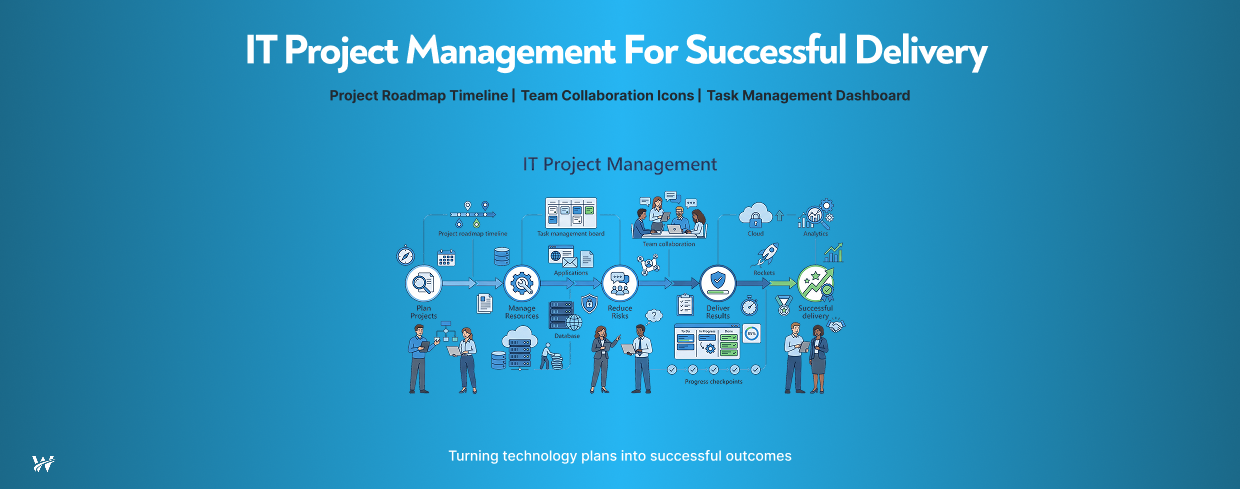
Successful technology initiatives begin with a clear and detailed project plan. IT Project Management helps organizations define objectives, identify requirements, establish timelines, and assign responsibilities before execution begins.
A well-structured plan reduces confusion and ensures that everyone involved understands project expectations. It also helps teams anticipate challenges and create strategies to address potential obstacles.
Without proper planning, IT projects often experience delays, unclear priorities, and unnecessary costs.
Technology projects require collaboration between multiple teams, including IT professionals, business users, vendors, and leadership stakeholders. Managing these resources effectively is essential for project success.
IT project managers ensure the right people, tools, and technologies are available at the right time. They help balance workloads, coordinate team activities, and make sure resources are being used efficiently.
Proper resource management helps organizations complete projects faster while maintaining quality and performance standards.
Every technology project involves potential risks, including technical challenges, security concerns, budget limitations, and changing business requirements.
Professional IT Project Management focuses on identifying risks early and developing mitigation strategies before problems impact project outcomes.
Risk management activities may include:
By proactively managing risks, organizations can reduce disruptions and improve project stability.
Poor communication is one of the most common reasons technology projects fail. IT projects often involve multiple stakeholders with different priorities and expectations.
IT Project Management establishes clear communication channels between:
Regular updates, project reports, and stakeholder meetings help ensure everyone remains aligned throughout the project lifecycle.
Better collaboration improves decision-making and helps teams resolve issues quickly.
Implementing new technology is only successful when employees can effectively use and benefit from it.
IT Project Management includes planning for user adoption, training, testing, and change management. This ensures employees understand how new systems improve their daily operations.
A well-managed technology rollout minimizes disruption and helps organizations maximize the value of their technology investments.
Key Areas Managed in IT Projects
Application Implementation
Organizations frequently implement new business applications to improve productivity, customer experience, and operational efficiency.
IT project managers oversee activities such as:
Effective management ensures applications are implemented smoothly and aligned with business requirements.
Infrastructure Upgrades
Technology infrastructure must evolve as businesses grow. IT Project Management helps organizations manage infrastructure initiatives, including:
Proper planning minimizes downtime and ensures business operations continue smoothly during technology upgrades.
Business Process Automation
Many organizations are adopting automation solutions to reduce manual work and improve efficiency.
IT project managers support automation initiatives by coordinating:
Solutions such as Microsoft Power Apps, Microsoft Power Automate, and other digital platforms can help organizations streamline operations when implemented through effective project management.
Data Management and Analytics Projects
Data has become one of the most valuable assets for modern organizations. IT Project Management supports initiatives focused on improving data quality, accessibility, and business insights.
These projects may include:
Strong project management ensures data initiatives are completed securely and provide actionable insights for decision-makers.
How Businesses Benefit from Professional IT Project Management
Organizations that invest in professional IT Project Management gain several advantages, including:
Faster Project Delivery
A structured project approach helps teams stay focused on priorities, manage dependencies, and complete initiatives within planned timelines.
Better Cost Control
IT project managers monitor budgets, track expenses, and identify opportunities to prevent unnecessary costs.
Improved Collaboration
Clear roles, communication processes, and stakeholder alignment improve teamwork across departments.
Higher Technology ROI
Effective project execution ensures technology investments support business goals and deliver measurable improvements.
Reduced Operational Disruption
Careful planning, testing, and implementation strategies help organizations introduce new technologies with minimal impact on daily operations.
IT Project Management and Digital Transformation
Digital transformation requires organizations to implement multiple technology initiatives, from cloud adoption and cybersecurity improvements to automation and business intelligence solutions.
Without effective IT Project Management, transformation efforts can become fragmented and difficult to manage.
Professional project management helps organizations:
By combining technology expertise with proven project management practices, businesses can successfully navigate digital transformation.
Conclusion
IT Project Management provides the structure, strategy, and coordination organizations need to successfully deliver technology initiatives. From software implementations and infrastructure upgrades to automation and data projects, effective project management ensures technology investments create real business value.
As businesses continue to adopt new technologies, partnering with experienced IT Project Management professionals can help reduce risks, improve efficiency, and achieve digital transformation goals.
Call to Action
Ready to transform your technology initiatives into successful business outcomes?
Partner with Wexus Win Works for expert IT Project Management services that help organizations plan, execute, and deliver technology projects efficiently. Our experienced teams help businesses manage complex IT initiatives, optimize resources, reduce risks, and achieve their digital transformation goals.
Contact Wexus Win Works today to discuss how our IT Project Management solutions can help your organization deliver successful technology projects.