
Introduction
As businesses expand, so does the complexity of their technology environment. What may have started as a few computers, a small network, and basic software can quickly evolve into a combination of cloud platforms, remote work environments, business applications, cybersecurity tools, databases, and multiple vendors.
Without regular evaluation, these growing IT environments often develop hidden issues that affect performance, increase costs, create security risks, and limit scalability. Many organizations only discover these problems after experiencing downtime, slow systems, or unexpected security incidents.
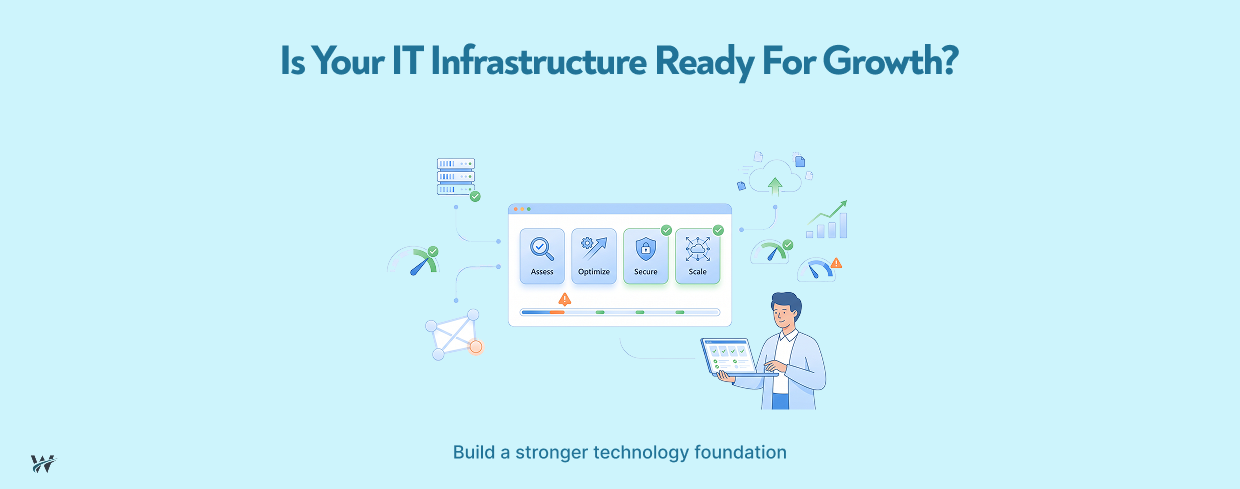
An IT Infrastructure Assessment provides businesses with a complete picture of their technology environment. It identifies strengths, uncovers weaknesses, and creates a roadmap for improving performance, reliability, and long-term growth.
Whether your organization relies on Microsoft 365, Azure, AWS, Google Cloud Platform, on-premises infrastructure, or hybrid environments, regular assessments are an essential part of effective IT Management and IT Consulting.
What Is an IT Infrastructure Assessment?
An IT Infrastructure Assessment is a comprehensive review of an organization's entire technology ecosystem. Rather than focusing on a single issue, it evaluates how every component works together to support business operations.
The assessment typically examines:
The goal is to determine whether the current infrastructure is secure, efficient, scalable, and aligned with business objectives.
The outcome is not simply a list of problems. It is a practical action plan that helps organizations prioritize improvements based on risk, business impact, and budget.
Why Regular IT Infrastructure Assessments Matter
Technology changes continuously. Businesses introduce new applications, migrate workloads to the cloud, support remote employees, and adopt AI-powered tools. Without regular reviews, IT environments become more difficult to manage.
Here are the biggest benefits of performing routine infrastructure assessments.
Identify Performance Bottlenecks
Slow systems frustrate employees and reduce productivity. Over time, aging hardware, overloaded servers, inefficient databases, or poorly configured networks can create delays that affect daily operations.
An assessment helps identify:
Resolving these issues improves employee productivity and enhances customer experiences.
Strengthen Cybersecurity
Cybersecurity threats continue to evolve, making proactive security assessments more important than ever.
A comprehensive infrastructure assessment reviews:
Finding and addressing vulnerabilities before attackers exploit them significantly reduces business risk.
Optimize Cloud Resources
Many organizations adopt cloud services for flexibility and scalability. However, cloud costs often increase over time due to unused resources, oversized virtual machines, duplicate storage, or poorly managed subscriptions.
An assessment evaluates cloud usage across platforms such as:
The review identifies opportunities to:
This allows businesses to maximize the value of their cloud investments.
Improve IT Planning
Technology investments should support long-term business goals rather than reacting to immediate problems.
Infrastructure assessments provide valuable insights for:
A clear technology roadmap helps organizations make informed decisions and avoid costly surprises.
Reduce Operational Risks
Every business depends on technology to maintain daily operations. Unexpected outages can disrupt productivity, customer service, and revenue.
Infrastructure assessments identify risks such as:
Addressing these issues improves overall business continuity and operational resilience.
Optimize IT Spending
Businesses often pay for software licenses, cloud services, and infrastructure they no longer need.
An assessment reviews:
Eliminating unnecessary expenses allows organizations to redirect budgets toward higher-value technology initiatives.
Support Business Growth
As organizations expand, their technology must grow with them.
Infrastructure assessments help answer important questions:
Answering these questions ensures technology remains an enabler rather than a barrier to growth.
Signs Your Business Needs an IT Infrastructure Assessment
Many organizations wait until a major issue occurs before reviewing their infrastructure.
However, several warning signs indicate that an assessment should be scheduled sooner rather than later.
Frequent Downtime
Unexpected outages often point to infrastructure weaknesses, hardware failures, or network issues that require immediate attention.
Slow Applications
If employees regularly experience slow business applications, delayed database queries, or poor system performance, the underlying infrastructure may need optimization.
Rising Cloud Costs
Unexpected increases in Azure, AWS, or Google Cloud Platform spending often indicate inefficient resource allocation or unused services.
Aging Hardware
Older servers, laptops, networking equipment, and storage systems may reduce performance while increasing maintenance costs and security risks.
Growing Security Concerns
If your organization has experienced phishing attempts, failed audits, or increasing cybersecurity alerts, a comprehensive security review should become a priority.
Rapid Business Expansion
Hiring new employees, opening new offices, supporting remote work, or acquiring another business often requires infrastructure improvements to maintain performance and security.
Upcoming Digital Transformation Projects
Organizations implementing Microsoft Dynamics 365, SharePoint, Power BI, Power Apps, AI solutions, or other enterprise applications should evaluate their infrastructure before deployment to ensure a smooth implementation.
What Happens During an Infrastructure Assessment?
A professional IT Consulting team typically follows a structured process to evaluate the technology environment.
Discovery and Inventory
The assessment begins by documenting servers, networks, cloud environments, endpoints, databases, software, and business applications.
Performance Evaluation
Infrastructure components are analyzed to identify performance limitations and capacity concerns.
Security Review
Cybersecurity controls, access management, backup systems, and compliance practices are evaluated to identify potential risks.
Cloud Assessment
Cloud resources are reviewed to optimize costs, improve governance, and strengthen security.
Gap Analysis
The current environment is compared with industry best practices and business requirements.
Recommendations and Roadmap
Organizations receive a prioritized action plan outlining improvements based on business impact, urgency, and investment.
This roadmap enables leadership to make informed technology decisions with confidence.
Why Partner with an Experienced IT Consulting Provider?
Conducting an infrastructure assessment requires expertise across networking, cloud computing, cybersecurity, databases, Microsoft technologies, and IT Management.
An experienced IT Consulting partner brings:
Rather than simply identifying issues, the right partner helps organizations implement practical solutions that align technology with business goals.
Conclusion
As businesses grow, technology becomes increasingly complex. Without regular reviews, hidden inefficiencies, security gaps, and rising operational costs can limit productivity and slow business growth.
An IT Infrastructure Assessment provides a comprehensive understanding of your technology environment while identifying opportunities to improve performance, strengthen cybersecurity, optimize cloud resources, and reduce unnecessary expenses.
By making infrastructure assessments a regular part of your IT strategy, organizations can build a secure, scalable, and high-performing technology foundation that supports long-term success.
Call to Action
Is your technology infrastructure ready to support your next stage of growth?
Wexus Win Works delivers comprehensive IT Infrastructure Assessments, IT Consulting, IT Management, cloud optimization, cybersecurity evaluations, and Managed Services to help businesses improve performance, reduce costs, and strengthen security.
Contact our team today to schedule a technology health check and build a roadmap for a more resilient IT environment.