
Published: 18 March 2026, 08:00 PM
Introduction
In today’s fast-evolving digital landscape, technology is no longer just a support function. It is the backbone of business operations, innovation, and competitive advantage. From cloud computing and cybersecurity to data analytics and collaboration tools, organizations rely heavily on IT systems to function effectively.
However, managing this complex ecosystem is not easy. Businesses often face challenges such as rising IT costs, lack of skilled professionals, increasing cybersecurity threats, and the constant need to upgrade systems. Building and maintaining an in-house IT team that can handle all these responsibilities is expensive and time-consuming.
This is where managed IT services come into play. By outsourcing IT operations to specialized providers, organizations can ensure that their technology infrastructure is optimized, secure, and aligned with business goals. Managed IT services not only reduce operational burdens but also significantly improve overall business efficiency.
What Are Managed IT Services
Managed IT services refer to the practice of outsourcing IT management and support to a third-party provider, commonly known as a Managed Service Provider (MSP). These providers take responsibility for monitoring, maintaining, and improving an organization’s IT environment.
Instead of reacting to problems after they occur, MSPs adopt a proactive approach. They continuously monitor systems, identify potential issues, and resolve them before they impact business operations.
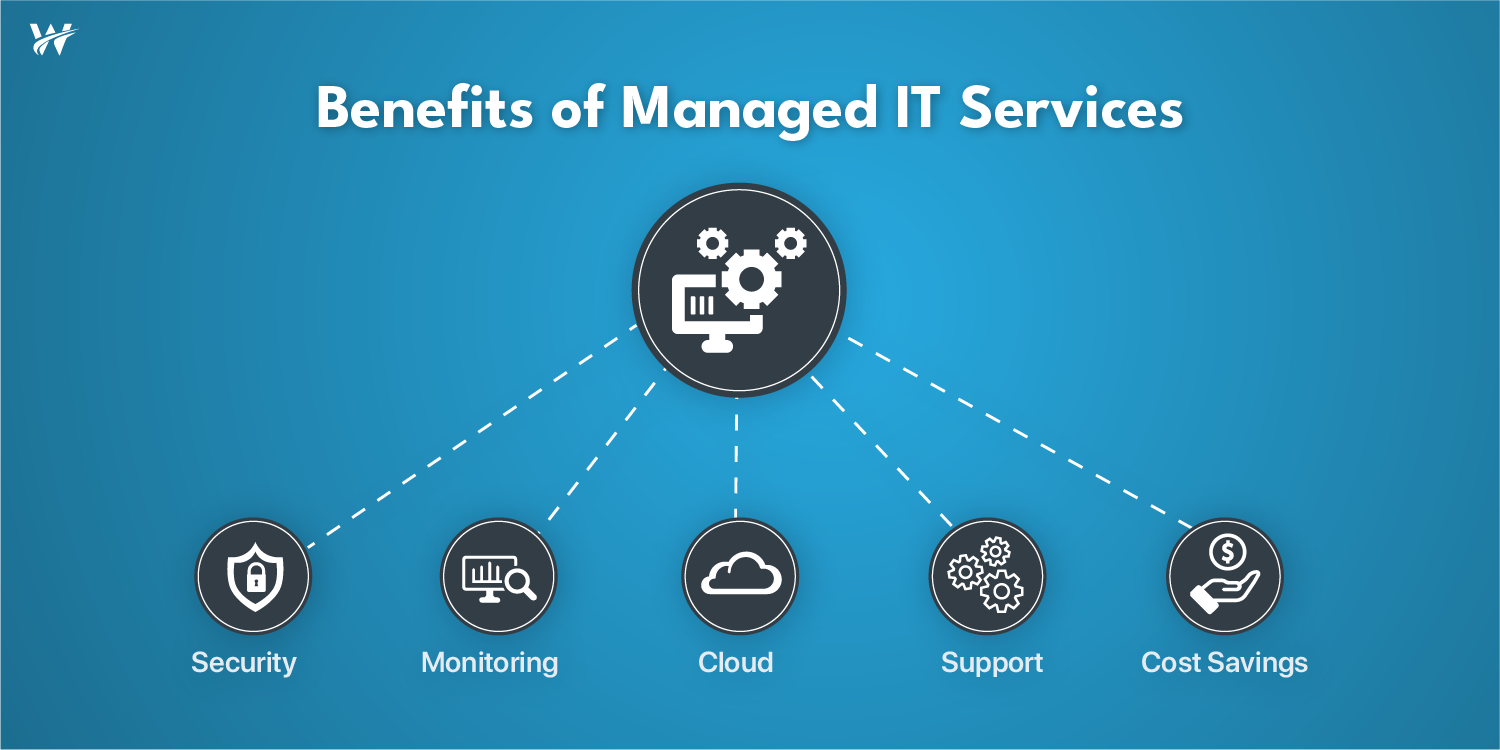
Managed IT services typically include:
Continuous tracking of servers, networks, and devices to ensure optimal performance.
Protection against cyber threats through advanced security tools, monitoring, and compliance measures.
Management of cloud platforms, including deployment, optimization, and cost control.
End-user support for technical issues, ensuring minimal disruption to daily operations.
Regular backups and disaster recovery solutions to protect critical business data.
Maintenance, updates, and performance optimization of business applications.
This model allows organizations to shift their focus from managing IT problems to driving growth and innovation.
Key Benefits of Managed IT Services
One of the most significant advantages of managed IT services is proactive monitoring. Traditional IT models often rely on a break-fix approach, where issues are addressed only after they occur. This leads to downtime, lost productivity, and potential revenue loss.
Managed service providers use advanced monitoring tools to detect anomalies in real time. Whether it is a failing server, network slowdown, or security vulnerability, issues are identified and resolved before they escalate.
This proactive approach ensures:
Managing IT internally can lead to unpredictable expenses. Hardware failures, emergency repairs, and hiring skilled professionals can significantly increase costs.
Managed IT services operate on a subscription-based model, allowing businesses to pay a fixed monthly fee. This provides:
Additionally, businesses save on recruitment, training, and infrastructure investments.
Cyber threats are becoming more sophisticated and frequent. Small and medium-sized businesses are particularly vulnerable due to limited security resources.
Managed IT service providers offer comprehensive cybersecurity solutions, including:
With continuous monitoring and updates, businesses can stay protected against evolving threats and ensure compliance with industry regulations.
Hiring and retaining skilled IT professionals is a major challenge. Technology evolves rapidly, and keeping an in-house team updated with the latest skills requires continuous investment.
Managed IT services provide access to a team of experts with diverse skill sets, including:
This ensures that businesses benefit from industry best practices without the cost of building a large internal team.
When internal teams are not burdened with IT issues, they can focus on strategic initiatives and core business activities. Managed IT services streamline operations by ensuring that systems run smoothly and efficiently.
This leads to:
Organizations can focus on innovation, customer experience, and business growth instead of troubleshooting technical problems.
As businesses grow, their IT needs evolve. Managed IT services offer scalable solutions that can be adjusted based on business requirements.
Whether it is expanding cloud storage, adding new users, or integrating new technologies, MSPs provide the flexibility to scale operations without major disruptions.
This is especially beneficial for startups and growing enterprises that need agile IT solutions.
Unexpected events such as cyberattacks, hardware failures, or natural disasters can disrupt business operations. Managed IT services include robust backup and disaster recovery solutions to ensure business continuity.
Key benefits include:
This ensures that organizations can continue operations even during unforeseen disruptions.
When Businesses Should Consider Managed IT Services
Not every organization immediately recognizes the need for managed IT services. However, certain signs indicate that it is time to consider outsourcing IT operations.
Businesses should evaluate managed IT services if they:
Organizations that identify with these challenges can benefit significantly from transitioning to a managed services model.
How Managed IT Services Drive Digital Transformation
Digital transformation is a priority for modern businesses, but it requires a strong IT foundation. Managed IT services play a crucial role in enabling this transformation.
They help organizations:
By providing the necessary infrastructure and expertise, MSPs accelerate digital transformation while minimizing risks.
How Wexus Win Works Delivers Managed IT Services
Wexus Win Works provides comprehensive managed IT services designed to help businesses achieve efficiency, security, and scalability. Our solutions are tailored to meet the unique needs of each organization.
Our key offerings include:
We ensure that your IT systems operate smoothly with continuous monitoring and proactive maintenance.
Our advanced security solutions protect your business from evolving cyber threats.
We help businesses optimize their cloud environments for performance, cost, and scalability.
From Microsoft 365 to Azure, we provide end-to-end support for Microsoft technologies.
Our responsive support team ensures quick resolution of user issues, minimizing disruptions.
At Wexus Win Works, we focus on delivering reliable, secure, and high-performing IT environments that align with business goals.
Future Trends in Managed IT Services
As technology continues to evolve, managed IT services are also adapting to new trends:
Automation tools are improving efficiency and reducing manual tasks.
AI-driven threat detection is enhancing security capabilities.
More businesses are adopting cloud-native solutions.
Managed services are enabling secure and efficient remote work environments.
Enhanced analytics tools are helping businesses make informed decisions.
Organizations that leverage these trends through managed IT services will be better positioned for future growth.
Conclusion
Managed IT services have become a critical component of modern business strategy. By outsourcing IT management to experts, organizations can reduce operational complexity, improve system performance, and enhance security.
From proactive monitoring and cost control to scalability and specialized expertise, managed IT services provide a comprehensive solution for businesses looking to optimize their technology environment.
Companies that adopt this model are not only able to improve efficiency but also gain a competitive advantage in an increasingly digital world.
Call to Action
Partner with Wexus Win Works to streamline your IT operations and improve business efficiency through reliable and scalable managed IT services. Let our experts handle your technology so you can focus on growing your business.