
Published: 23 March 2026, 09:30 PM
Introduction
Artificial Intelligence has officially moved beyond the experimental phase and into the operational core of modern enterprises. In 2026, AI is not just a technological upgrade. It is a strategic necessity that defines how organizations operate, compete, and scale in a digitally driven economy.
Businesses today face increasing pressure to deliver faster services, personalize customer experiences, optimize costs, and make data-driven decisions in real time. Traditional systems and manual processes are no longer sufficient to meet these demands. This is where AI steps in as a transformative force.
From intelligent automation to predictive analytics and autonomous decision-making, AI is fundamentally reshaping business operations across industries. Organizations that leverage AI effectively are not only improving efficiency but also unlocking new revenue streams and innovation opportunities.
At the same time, companies that fail to adopt AI risk becoming obsolete in an increasingly competitive landscape.
What Artificial Intelligence Means in a Business Context
Artificial Intelligence in business refers to the use of advanced algorithms, machine learning models, and intelligent systems that can process vast amounts of data, learn from patterns, and make decisions with minimal human intervention.
Unlike traditional software, which operates on predefined rules, AI systems continuously improve over time by learning from new data inputs.
In modern enterprises, AI is being applied across multiple functions:
The key differentiator is that AI does not just automate tasks. It enhances decision-making and enables organizations to operate proactively rather than reactively.
Key Areas Where AI Is Transforming Business Operations
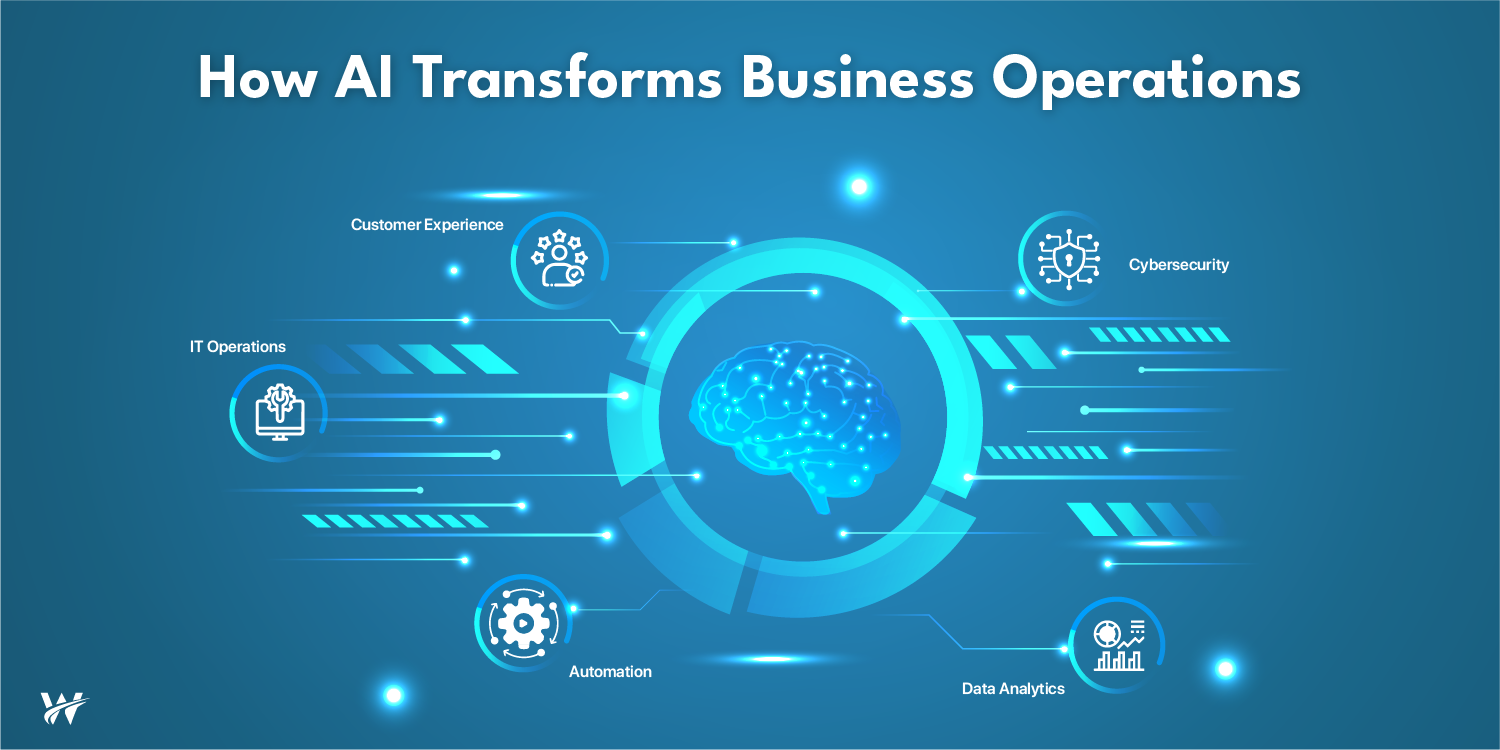
Automation is no longer limited to rule-based tasks. In 2026, AI-driven automation goes beyond traditional Robotic Process Automation (RPA) by introducing cognitive capabilities.
AI can now:
For example, in finance departments, AI systems can process invoices, detect anomalies, and approve transactions automatically. In HR, AI can screen resumes, schedule interviews, and even predict candidate success rates.
This level of automation significantly reduces operational bottlenecks and increases scalability.
Data is the backbone of modern business, but the real value lies in how quickly and effectively it is utilized.
AI-powered analytics platforms enable:
Organizations can move from descriptive analytics to predictive and even prescriptive decision-making.
For instance, retail companies use AI to predict demand fluctuations, optimize inventory, and reduce waste. Financial institutions leverage AI to detect fraud patterns and assess credit risks more accurately.
The result is faster, smarter, and more confident decision-making at every level of the organization.
Customer expectations in 2026 are driven by personalization, speed, and convenience. AI enables businesses to deliver highly tailored experiences at scale.
Advanced AI systems can:
Streaming platforms, e-commerce companies, and SaaS businesses already rely heavily on AI-driven recommendation engines to increase engagement and revenue.
AI also enhances customer support by providing instant responses, reducing wait times, and improving overall service quality.
As cyber threats become more sophisticated, traditional security measures are no longer sufficient. AI has become a critical component of modern cybersecurity strategies.
AI systems can:
Unlike manual monitoring, AI can analyze millions of data points simultaneously, making it far more effective in identifying and mitigating risks.
This proactive approach helps organizations protect sensitive data, maintain compliance, and ensure business continuity.
AI is revolutionizing IT operations through the adoption of AIOps, which combines AI and machine learning to automate and enhance IT management.
Key capabilities include:
For example, AI can detect early signs of system failure and resolve issues before they impact users. This reduces downtime, improves system reliability, and enhances user experience.
AIOps is particularly valuable for organizations managing complex cloud environments and large-scale digital infrastructure.
Supply chains are becoming increasingly complex and global. AI helps organizations optimize supply chain operations by providing real-time visibility and predictive insights.
AI enables:
This leads to reduced costs, improved efficiency, and greater resilience in supply chain operations.
Strategic Benefits of AI Adoption
AI is not just about efficiency. It delivers strategic advantages that directly impact business growth and competitiveness.
AI allows businesses to scale without a proportional increase in resources.
Organizations that leverage AI gain insights and capabilities that competitors may lack.
AI opens the door to new business models, products, and services.
Personalization and predictive analytics drive higher conversion rates and customer retention.
AI enables organizations to respond quickly to disruptions and market changes.
Challenges in Enterprise AI Adoption
Despite its transformative potential, AI adoption comes with significant challenges that organizations must address.
AI systems require clean, structured, and high-quality data. Poor data quality can undermine outcomes.
Integrating AI with legacy systems can be technically challenging and resource-intensive.
There is a growing demand for AI specialists, making it difficult to build skilled teams.
AI introduces concerns around data privacy, bias, and transparency.
Implementing AI requires investment in technology, infrastructure, and training.
Organizations must take a strategic and phased approach to overcome these challenges.
Best Practices for Successful AI Implementation
To maximize ROI and ensure long-term success, businesses should follow a structured approach to AI adoption.
Focus on areas where AI can deliver measurable business value quickly.
Invest in data governance, data quality, and data management systems.
Ensure that AI initiatives are directly linked to business objectives and KPIs.
Leverage cloud platforms to support AI workloads and scalability.
Collaborate with experienced technology providers to accelerate implementation and reduce risks.
Why Businesses Choose Wexus Win Works for AI Solutions
Wexus Win Works helps organizations unlock the full potential of AI through strategic, scalable, and results-driven solutions.
Our expertise includes:
We focus on delivering practical AI solutions that align with your business goals and generate measurable outcomes.
Our approach ensures that AI adoption is not just a technological upgrade but a strategic transformation.
Future Trends: What’s Next for AI in Business
Looking ahead, AI will continue to evolve and expand its role in business operations.
Key trends to watch include:
As these technologies mature, businesses will move closer to fully intelligent and autonomous operations.
Conclusion
Artificial Intelligence is transforming business operations at an unprecedented scale. It is redefining how organizations operate, make decisions, and deliver value to customers.
In 2026, AI is no longer optional. It is a critical driver of efficiency, innovation, and competitive advantage.
Organizations that adopt AI strategically can unlock new levels of growth and performance. Those that hesitate risk being left behind in an increasingly digital and AI-driven world.
Call to Action
Ready to transform your business with AI?
Connect with Wexus Win Works to explore how our AI-driven solutions can optimize your operations, enhance decision-making, and drive long-term growth.