
Published: 25 May 2026, 09:00PM
Introduction
Federal government agencies continue to invest heavily in digital transformation, cloud computing, cybersecurity, AI, data modernization, and IT infrastructure. As federal spending on technology increases, IT contractors have significant opportunities to secure long-term government contracts and expand their business operations.
However, winning and maintaining federal contracts requires more than technical expertise. Government agencies demand strict adherence to compliance standards, cybersecurity frameworks, reporting requirements, and operational regulations. Contractors must consistently demonstrate that their systems, processes, and documentation align with federal expectations.
Failure to maintain compliance can result in severe consequences, including financial penalties, failed audits, reputational damage, contract termination, and disqualification from future opportunities. Even highly skilled IT service providers may lose contracts if they cannot prove compliance readiness during reviews or audits.
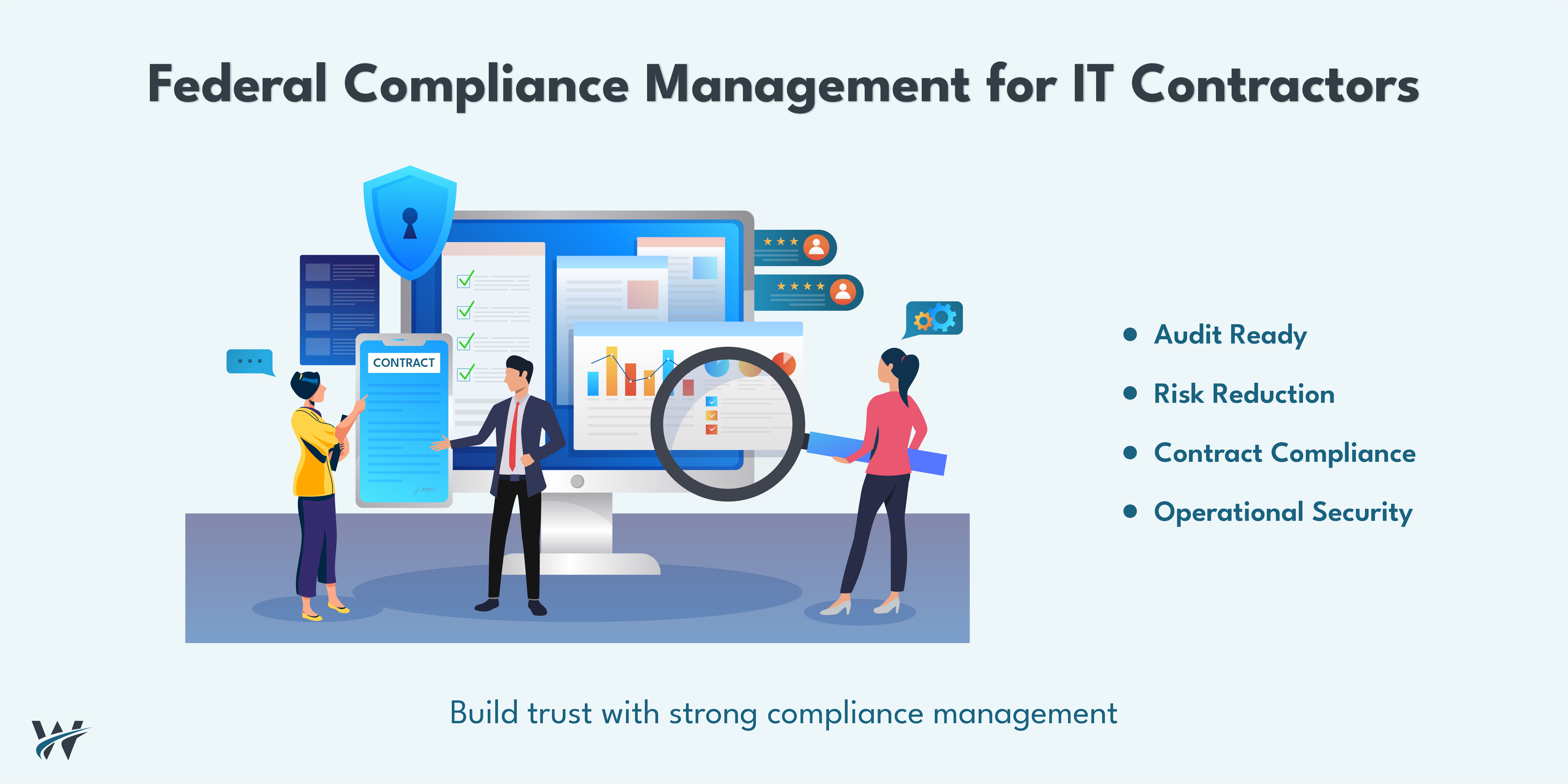
Federal compliance management helps organizations maintain operational accountability, improve security posture, reduce business risks, and remain audit ready at all times. A proactive compliance strategy not only protects contracts but also strengthens trust with government agencies and improves long-term contract performance.
For IT contractors operating in the federal marketplace, compliance management is no longer optional. It is a critical business function that directly impacts growth, competitiveness, and sustainability.
What Is Federal Compliance Management?
Federal compliance management refers to the process of monitoring, implementing, and maintaining adherence to government regulations, contract obligations, cybersecurity standards, and operational requirements.
Government contracts often include strict compliance expectations related to data protection, cybersecurity, reporting, workforce standards, documentation management, and risk mitigation. Contractors must continuously monitor these requirements to ensure ongoing compliance throughout the contract lifecycle.
Compliance management involves establishing policies, conducting assessments, maintaining records, implementing controls, and preparing for audits or reviews conducted by federal agencies.
Effective compliance management creates a structured framework that helps organizations:
For IT contractors, compliance management often extends across multiple departments, including IT operations, cybersecurity, human resources, finance, procurement, and executive leadership.
Common Compliance Areas for Federal IT Contractors
Federal government contracts typically require compliance across several operational and security categories. Understanding these areas is essential for maintaining eligibility and reducing contract risk.
Cybersecurity is one of the most important compliance areas for government contractors. Federal agencies require contractors to implement strong security controls to protect sensitive systems and government information.
Common cybersecurity frameworks and standards include:
Cybersecurity compliance helps contractors prevent data breaches, ransomware attacks, unauthorized access, and operational disruptions.
Organizations providing managed IT services, cloud solutions, Microsoft technologies, cybersecurity consulting, or helpdesk support must maintain strong security governance to meet federal expectations.
Accurate documentation is critical during government audits and compliance reviews. Agencies often require contractors to provide evidence that policies, controls, and operational processes are being followed consistently.
Essential documentation may include:
Poor documentation management can delay audits and create compliance gaps that impact contract performance.
Federal contracts frequently require ongoing reporting related to project performance, cybersecurity incidents, staffing, financial management, and operational metrics.
Timely and accurate reporting demonstrates accountability and transparency.
Examples include:
Automated reporting tools and centralized dashboards can help contractors improve visibility and reduce reporting errors.
Government contractors often handle sensitive federal data, citizen information, healthcare records, or confidential operational data.
Strong data privacy controls are necessary to ensure compliance with federal data protection regulations.
Key focus areas include:
Failure to protect sensitive information can result in legal liabilities and major reputational damage.
Federal compliance management also includes identifying, assessing, and mitigating operational and cybersecurity risks.
Risk management helps contractors proactively address vulnerabilities before they impact contracts or agency operations.
Common risk management activities include:
A strong risk management strategy supports long-term operational resilience.
Why Compliance Is Critical for Government Contractors
Compliance directly affects a contractor’s ability to compete for opportunities, maintain contracts, and build trust with federal agencies.
Protects Contract Eligibility
Non-compliance can lead to immediate contract issues and may disqualify businesses from future government opportunities.
Federal agencies evaluate contractor performance and compliance history during procurement reviews. Contractors with repeated compliance violations may face reduced competitiveness or suspension from bidding opportunities.
Maintaining compliance demonstrates professionalism, accountability, and operational maturity.
For businesses pursuing federal contracts in areas such as cloud computing, Microsoft services, cybersecurity consulting, IT staffing, or AI solutions, compliance readiness is essential for long-term success.
Reduces Operational Risk
Strong compliance management helps organizations reduce operational disruptions, legal exposure, and cybersecurity threats.
Without structured compliance processes, businesses may experience:
Compliance programs create consistency across operations and improve organizational stability.
Improves Customer Trust
Government agencies prefer working with contractors that demonstrate strong compliance and security practices.
An audit-ready organization provides agencies with confidence that:
Trust is especially important in industries involving cybersecurity, cloud migration, Microsoft Azure solutions, database management, and managed IT services.
Strong compliance practices often improve contractor reputation and increase opportunities for contract renewals or long-term partnerships.
Supports Audit Readiness
Federal agencies may conduct audits, assessments, and compliance reviews at any time during the contract lifecycle.
Audit readiness means contractors can quickly provide documentation, reports, policies, and operational evidence without disrupting daily operations.
Organizations with strong compliance programs can:
Audit readiness is not a one-time activity. It requires continuous monitoring and ongoing process improvement.
Key Challenges in Federal Compliance Management
Many IT contractors struggle to maintain compliance due to evolving regulations, resource limitations, and operational complexity.
Constantly Changing Regulations
Federal compliance requirements continue to evolve as cybersecurity threats and government priorities change.
Contractors must stay updated on:
Failure to adapt quickly can create compliance gaps.
Limited Internal Resources
Small and mid-sized contractors often lack dedicated compliance teams.
Managing audits, documentation, reporting, and cybersecurity controls can overwhelm internal staff, especially when organizations are focused on project delivery and client support.
Many contractors address this challenge through managed compliance services or specialized IT consulting support.
Complex Technology Environments
Modern IT environments include cloud platforms, remote workforces, hybrid infrastructures, mobile devices, and third-party vendors.
Managing compliance across these environments requires advanced visibility, automation, and security management capabilities.
Organizations using Microsoft 365, Azure, AWS, Salesforce, ServiceNow, or other enterprise platforms must ensure compliance controls are integrated across systems.
Best Practices for Federal Compliance Management
A proactive compliance strategy helps contractors reduce risks and improve operational efficiency.
Establish Internal Compliance Processes
Organizations should create structured compliance policies and accountability frameworks.
This includes:
Clear internal governance improves consistency and accountability across departments.
Maintain Accurate Documentation
Documentation is one of the most important aspects of audit readiness.
Contractors should maintain organized and centralized records for all compliance activities.
Best practices include:
Accurate documentation reduces audit preparation time and improves operational transparency.
Conduct Regular Assessments
Compliance assessments help organizations identify weaknesses before they become major issues.
Regular evaluations should include:
Continuous monitoring allows businesses to address issues proactively.
Train Employees on Compliance Responsibilities
Employees play a critical role in maintaining compliance.
Without proper training, human error can create major security and operational risks.
Training programs should cover:
Ongoing education strengthens organizational security culture and improves accountability.
Implement Security Automation Tools
Automation improves compliance efficiency and reduces manual errors.
Modern compliance management tools can help organizations:
Businesses leveraging Microsoft technologies, cloud platforms, AI solutions, and managed IT services can significantly improve compliance visibility through automation.
Partner With Compliance and IT Experts
Many contractors work with specialized IT consulting firms or managed service providers to strengthen compliance programs.
Experienced compliance partners can assist with:
External expertise helps organizations stay aligned with evolving federal requirements.
The Role of Technology in Compliance Management
Technology plays a major role in simplifying compliance operations and improving audit readiness.
Modern compliance management solutions provide centralized visibility into operational performance, cybersecurity controls, documentation, and reporting.
Important technologies include:
Microsoft Azure, Microsoft 365, Power BI, and other enterprise technologies help organizations improve compliance tracking and reporting efficiency.
Advanced analytics and AI can also help contractors identify compliance trends, predict risks, and improve operational decision-making.
Building a Long-Term Compliance Strategy
Federal compliance management should be treated as an ongoing business strategy rather than a short-term project.
Organizations that prioritize continuous improvement are better positioned to:
An effective long-term strategy includes:
Compliance maturity becomes a competitive advantage in the federal contracting marketplace.
Conclusion
Federal compliance management is essential for maintaining contract success, reducing operational risks, and building long-term government partnerships.
As federal agencies continue increasing cybersecurity and operational oversight, IT contractors must prioritize compliance readiness across every aspect of their business.
Strong compliance programs help organizations protect sensitive data, improve audit readiness, strengthen customer trust, and maintain eligibility for future government opportunities.
By implementing proactive compliance processes, conducting regular assessments, maintaining accurate documentation, and investing in cybersecurity and automation, contractors can create a resilient operational framework that supports sustainable growth.
For IT service providers, cybersecurity firms, cloud consultants, Microsoft partners, managed service providers, and staffing organizations, compliance management is no longer just a regulatory requirement. It is a strategic business priority that directly impacts competitiveness and long-term success in the federal marketplace.
Call to Action
Need help improving federal compliance management and audit readiness?
Our IT consulting and compliance experts help government contractors strengthen cybersecurity, streamline documentation, improve reporting processes, and maintain ongoing compliance with federal regulations.
Contact us today to learn how we can support your compliance strategy, reduce operational risk, and help your organization stay audit ready.