
Published: 22 April 2026, 09:00PM
In today’s digital economy, data is one of the most valuable assets a business owns. From customer records and sales transactions to inventory updates and financial reports, every important business activity depends on accurate and accessible information. But data alone is not enough. If it is poorly organized, unsecured, or difficult to access, it can quickly become a source of frustration, inefficiency, and risk. That is where database management becomes essential.
A well-managed database helps businesses store, organize, retrieve, and protect information efficiently. It ensures that teams can access the right data at the right time without delays, duplication, or confusion. More importantly, effective database management supports better decision-making, smoother operations, stronger security, and long-term business growth.
Many businesses underestimate the importance of database management until problems begin to appear. Slow application performance, missing records, duplicate data, system crashes, and security breaches are often the result of weak database practices. These issues can affect productivity, customer satisfaction, and even revenue. In contrast, businesses that invest in proper database management create a strong foundation for reliable performance and scalability.
This article explains what database management is, why it matters for business performance, the common challenges companies face, and the best practices that help keep databases secure, fast, and dependable. It also explores how Wexus Win Works helps businesses build and maintain efficient database systems that support their operational goals.
What Is Database Management?
Database management is the process of organizing, storing, maintaining, and securing data so it can be accessed accurately and efficiently. It involves the use of systems, tools, and procedures to handle large volumes of information in a structured way. A database management system, often called a DBMS, helps users and applications interact with data while maintaining consistency and control.
In simple terms, database management ensures that business data is not scattered, duplicated, or vulnerable. Instead, it is kept in a central, organized environment where authorized users can retrieve and update it when needed.
This process includes tasks such as:
Effective database management is not just a technical requirement. It is a strategic business function. When databases are managed well, employees work faster, reports are more accurate, customer experiences improve, and business leaders gain confidence in the information they use to make decisions.
Why Database Management Matters for Business Performance
Businesses rely on data every day. Whether it is processing orders, tracking inventory, managing payroll, or analyzing customer behavior, data drives operations across every department. If database systems are inefficient or unreliable, the entire organization can feel the impact.
Here are some of the main reasons database management is critical for business performance.
A properly managed database allows users to retrieve data quickly. This improves workflow efficiency and reduces delays in daily operations. Employees do not need to waste time searching through disorganized records or waiting for slow systems to load information.
For example, a sales team can instantly access customer histories, a finance team can generate reports faster, and support staff can resolve customer issues more efficiently. Speed matters, and database performance plays a major role in operational productivity.
Poor database management often leads to duplicate records, missing entries, and inconsistent information. These issues can cause reporting errors, poor customer communication, and costly business mistakes.
Good database management helps maintain data accuracy and consistency by using validation rules, standardized structures, and controlled updates. This means teams can rely on the data they use, which improves both decision-making and service quality.
Business data often includes sensitive information such as customer details, financial records, employee data, and operational insights. If this information is not properly secured, the business may face cyber threats, compliance issues, and reputational damage.
Strong database management includes security measures such as access controls, encryption, authentication, and activity monitoring. These protections reduce the risk of unauthorized access and data breaches.
If a database crashes or becomes unavailable, business operations can slow down or stop entirely. A well-managed database environment includes monitoring, maintenance, and recovery planning that help reduce downtime and restore systems quickly when issues occur.
For businesses that depend on continuous data access, reliability is essential. Database management supports stable performance and minimizes interruptions.
As a business grows, its data grows too. More customers, transactions, products, and users create greater demand on systems. Without proper database management, performance can decline as workloads increase.
Scalable database management ensures that systems can handle growth without sacrificing speed or reliability. This helps businesses expand confidently while maintaining strong operational performance.
Common Database Challenges Businesses Face
Many organizations experience database-related problems without realizing that the root cause is poor management. Below are some of the most common database challenges that can affect business performance.
Slow System Performance
Slow databases are one of the most frustrating issues for businesses. Delays in retrieving information or processing transactions can reduce employee productivity and negatively affect customer experiences. Common causes include unoptimized queries, poor indexing, outdated infrastructure, and excessive data loads.
Data Duplication
Duplicate records create confusion and reduce data quality. They can lead to inaccurate reporting, repeated communications, billing issues, and operational inefficiencies. Data duplication often occurs when there are weak controls for data entry and poor database structure.
Security Vulnerabilities
Without proper management, databases may be exposed to unauthorized access, malware, or cyberattacks. Weak passwords, outdated software, lack of encryption, and poor user permissions increase the risk of data breaches.
Lack of Backups
A database without reliable backups is a major business risk. Hardware failures, accidental deletions, ransomware, and software issues can result in serious data loss. Without a backup and recovery strategy, restoring operations can be difficult, expensive, or impossible.
Inconsistent Data
When different departments use separate systems or enter information in different formats, inconsistencies can appear across the database. This makes reporting less accurate and can create confusion in business processes.
Limited Visibility
Without monitoring and reporting tools, businesses may not know when a database is slowing down, experiencing unusual activity, or approaching storage limits. Lack of visibility makes it harder to address problems before they affect operations.
Best Practices for Effective Database Management
To support business performance, organizations need clear and consistent database management practices. The following best practices help improve reliability, security, and efficiency.
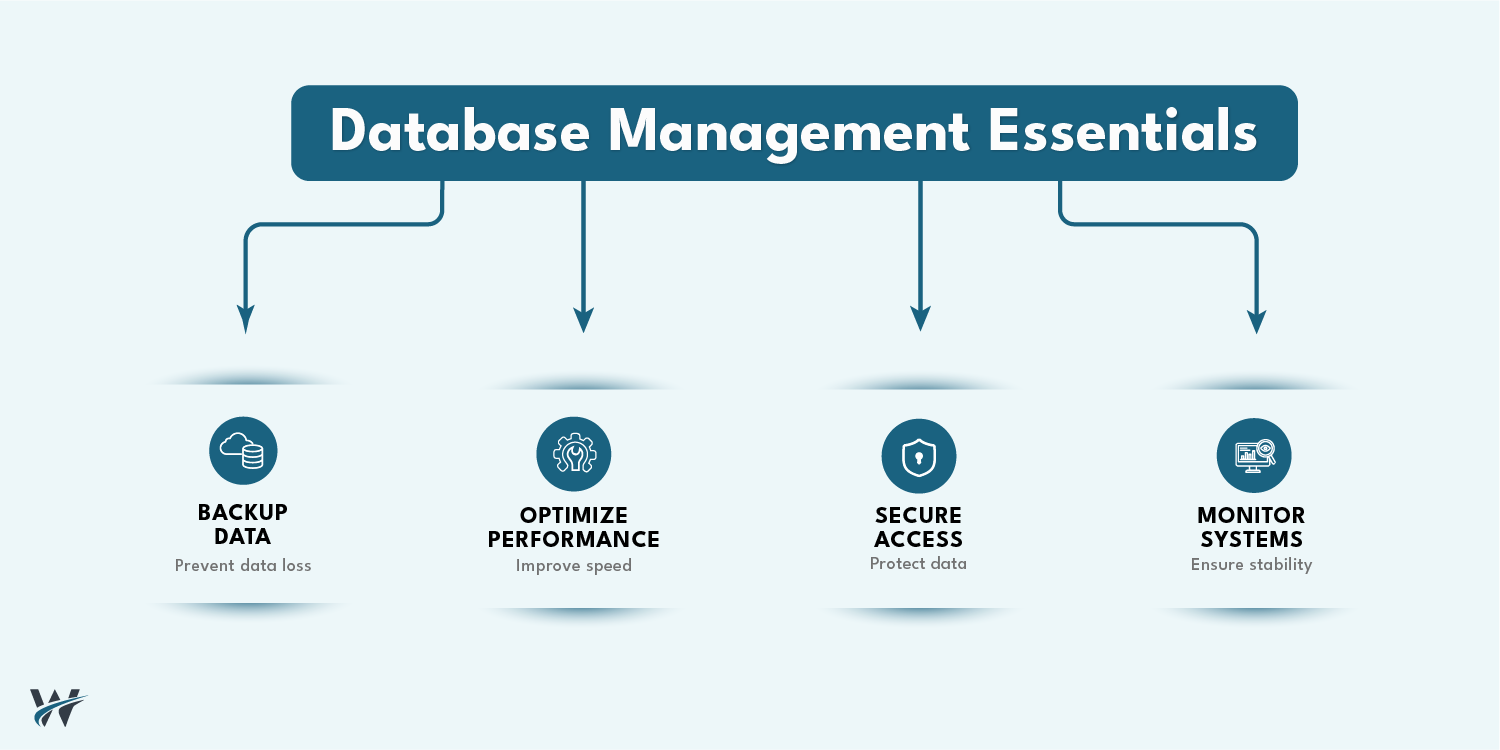
Regular backups are one of the most important parts of database management. They protect businesses from data loss caused by human error, cyberattacks, hardware failures, or system crashes.
A strong backup strategy should include:
Backups are only useful if they can be restored successfully. That is why recovery testing is just as important as backup creation.
Database performance directly affects how quickly applications and users can access information. Optimization improves speed, reduces resource consumption, and supports smoother business operations.
Performance optimization may include:
Businesses that optimize their databases experience faster operations and fewer performance bottlenecks.
Protecting sensitive data should be a top priority. Database security involves limiting access to authorized users and protecting information from both internal misuse and external threats.
Important security practices include:
Strong database security not only protects business assets but also helps organizations meet legal and regulatory requirements.
Monitoring helps businesses detect performance issues, suspicious activity, and capacity problems before they become serious. Real-time insights allow database administrators to respond quickly and keep systems running smoothly.
Monitoring should track:
By identifying trends early, businesses can prevent downtime and improve overall system reliability.
Clear policies for data entry, usage, naming conventions, and maintenance help keep databases consistent and accurate. Data governance ensures that everyone across the organization follows the same rules for handling information.
Standardization reduces duplication, improves reporting quality, and supports better collaboration between departments.
Databases need regular maintenance to stay healthy. This includes applying updates, checking logs, rebuilding indexes, cleaning outdated records, and testing failover systems. Routine maintenance prevents small issues from turning into larger operational problems.
Business Benefits of Strong Database Management
When businesses prioritize database management, the benefits go far beyond IT. A reliable database environment creates positive effects across the entire organization.
Faster Operations
Efficient databases allow staff and systems to complete tasks more quickly. This reduces delays, improves internal workflows, and supports better customer service.
Better Data Accuracy
Well-managed databases reduce errors, duplication, and inconsistencies. Accurate data leads to better planning, reporting, and decision-making.
Improved Security
Strong controls protect valuable business information and reduce exposure to breaches, fraud, and unauthorized access.
Reliable Performance
Stable databases reduce downtime and keep applications running consistently. Reliability helps teams stay productive and supports a better experience for customers and partners.
Better Decision-Making
When business leaders trust their data, they can make smarter decisions faster. Reliable databases support analytics, forecasting, and strategic planning.
Cost Savings
Poor database performance can lead to lost productivity, security incidents, and system failures. Effective database management reduces these risks and helps businesses avoid unnecessary expenses.
Scalability for Growth
As business needs evolve, a well-managed database can scale to support more users, more transactions, and more complex applications without major disruptions.
How Wexus Win Works Helps Businesses Manage Databases
Managing a database effectively requires technical expertise, planning, and ongoing attention. Many businesses do not have the time or internal resources to handle every aspect of database administration on their own. That is where Wexus Win Works provides value.
Wexus Win Works helps businesses build, manage, and optimize database systems that support performance, reliability, and security. Their services are designed to reduce operational risk and ensure that data remains accessible, protected, and efficient.
Database Setup and Management
Wexus Win Works assists with designing and setting up databases that match business needs. Proper setup is important because it affects performance, security, and scalability from the start. Their team helps ensure that the database is structured correctly and managed consistently over time.
Performance Optimization
Slow systems can affect every area of a business. Wexus Win Works helps improve database speed and efficiency by identifying bottlenecks, optimizing queries, refining configurations, and improving overall system performance.
Data Security Implementation
Security is critical for every organization handling sensitive information. Wexus Win Works helps implement security measures such as controlled access, encryption, system hardening, and monitoring practices that reduce the risk of data exposure.
Backup and Recovery Solutions
Data loss can be devastating for a business. Wexus Win Works provides backup and recovery solutions that help protect information and support fast restoration when problems occur. This reduces downtime and helps maintain business continuity.
Ongoing Monitoring and Support
A database needs constant attention to perform at its best. Wexus Win Works provides monitoring and support to identify issues early, maintain reliability, and keep systems aligned with changing business demands.
By working with an experienced provider, businesses can reduce technical stress and focus more on growth, service delivery, and strategic goals.
Why Businesses Should Not Ignore Database Management
Some businesses view database management as a background IT task rather than a business priority. That mindset can be costly. Databases power essential systems, and when they are neglected, the impact can spread quickly across the organization.
Ignoring database management may result in:
On the other hand, businesses that invest in proper database management gain a stronger operational foundation. They are better prepared to handle growth, improve efficiency, and protect valuable information.
In an increasingly data-driven market, database management is not optional. It is a core part of business success.
Conclusion
Effective database management is essential for maintaining strong business performance, protecting critical information, and supporting long-term growth. A well-managed database helps organizations access data quickly, reduce errors, improve security, prevent downtime, and operate more efficiently.
Businesses that ignore database management often face challenges such as slow systems, duplicate records, weak security, and data loss. By following best practices like regular backups, performance optimization, access control, monitoring, and routine maintenance, companies can create a more reliable and secure data environment.
Wexus Win Works helps businesses take control of their data through expert database setup, performance optimization, security implementation, and backup and recovery solutions. With the right database management strategy, organizations can improve daily operations, strengthen decision-making, and build a foundation for sustainable success.
Partner With Wexus Win Works
Partner with Wexus Win Works to manage, secure, and optimize your business data for better performance, stronger reliability, and long-term growth.