
Published: 08 April 2026, 09:00 PM
Introduction
Cloud computing has transformed the way businesses operate. From startups to large enterprises, organizations are increasingly moving their infrastructure, applications, and data to the cloud to gain flexibility, scalability, and cost efficiency. Platforms like Microsoft Azure, Amazon Web Services, and Google Cloud Platform provide robust environments that enable businesses to innovate faster and operate more efficiently.
However, with these benefits comes a critical responsibility: security. While cloud providers offer strong built in security features, the responsibility of protecting data does not lie solely with them. Misconfigurations, weak access controls, and lack of monitoring can expose sensitive business information to cyber threats.
A well planned cloud security strategy is no longer optional. It is essential for protecting systems, safeguarding data, and ensuring business continuity in an increasingly digital world. In this blog, we will explore common cloud security risks, best practices every business should follow, and how organizations can build a resilient cloud security framework.
Understanding Cloud Security
Cloud security refers to a set of policies, technologies, controls, and practices designed to protect cloud based systems, data, and infrastructure. It includes everything from identity management and data protection to threat detection and compliance.
Unlike traditional on premise environments, cloud security operates on a shared responsibility model. Cloud providers are responsible for securing the infrastructure, while businesses are responsible for securing their data, applications, and user access.
Failing to understand this shared responsibility often leads to security gaps that attackers can exploit.
Common Cloud Security Risks
Before implementing best practices, it is important to understand the most common risks businesses face in the cloud.
One of the biggest security risks in the cloud is improper identity and access management. When users have excessive permissions or weak authentication mechanisms, it becomes easier for attackers to gain unauthorized access.
For example, using simple passwords or sharing credentials across teams increases the risk of account compromise. Without proper role based access control, employees may access sensitive data beyond their responsibilities.
Misconfigured storage services are a leading cause of data breaches. Publicly accessible storage buckets, open databases, or improperly secured backups can expose sensitive information.
Many businesses unknowingly leave cloud storage unprotected, making it accessible to anyone on the internet.
Without continuous monitoring, organizations cannot detect suspicious activities or potential threats in real time. Lack of visibility into cloud environments makes it difficult to identify unauthorized access, unusual behavior, or security incidents.
This delay in detection can result in significant damage.
APIs are essential for cloud applications, enabling communication between services. However, unsecured APIs can become entry points for attackers.
Weak authentication, lack of encryption, and improper validation can expose APIs to attacks such as data injection and unauthorized access.
Data breaches remain one of the most serious cloud security threats. Sensitive business information, customer data, and intellectual property can be compromised due to vulnerabilities, insider threats, or external attacks.
A single data breach can lead to financial losses, reputational damage, and legal consequences.
Best Practices for Cloud Security
To mitigate these risks, businesses must adopt a proactive and structured approach to cloud security. Below are the best practices every organization should follow.
Access control is the foundation of cloud security. Organizations should follow the principle of least privilege, ensuring users only have access to the resources they need.
Key strategies include:
Using tools like Microsoft Entra ID (formerly Azure Active Directory) helps manage identities and enforce secure access policies across cloud environments.
Encryption protects data both at rest and in transit, ensuring that even if data is intercepted, it cannot be read without the proper keys.
Best practices include:
Cloud providers offer built in encryption features, but businesses must ensure they are properly configured and consistently applied.
Real time monitoring is essential for identifying and responding to security threats. Businesses should implement monitoring tools that provide visibility into cloud activities.
Key measures include:
Solutions like Microsoft Defender for Cloud help organizations detect vulnerabilities and respond to threats proactively.
Periodic audits help identify vulnerabilities and ensure compliance with security standards.
Organizations should conduct:
Regular audits ensure that security measures remain effective as the cloud environment evolves.
APIs should be protected using strong authentication and validation mechanisms.
Businesses should:
Securing APIs reduces the risk of unauthorized access and data exposure.
Data loss can occur due to cyberattacks, system failures, or human errors. A strong backup and disaster recovery strategy ensures business continuity.
Best practices include:
A well prepared disaster recovery plan minimizes downtime and ensures quick restoration of services.
Many industries must comply with regulations related to data protection and privacy. Businesses should ensure their cloud environments meet standards such as:
Compliance not only reduces legal risks but also builds trust with customers.
Human error is one of the leading causes of security incidents. Training employees on cloud security best practices is essential.
Organizations should:
An informed workforce acts as the first line of defense against cyber threats.
Benefits of Cloud Security
Implementing strong cloud security practices offers several advantages for businesses.
A secure cloud environment reduces the risk of cyberattacks such as ransomware, phishing, and data breaches. Advanced security measures help detect and prevent threats before they cause damage.
With proper encryption and access control, businesses can ensure that their sensitive data remains protected at all times.
Adhering to security standards and regulations helps organizations avoid legal penalties and maintain industry compliance.
Strong security measures, combined with backup and recovery strategies, ensure uninterrupted business operations even during incidents.
Customers are more likely to trust businesses that prioritize data security. A secure cloud environment builds confidence and strengthens brand reputation.
How Wexus Win Works Helps
Implementing cloud security can be complex, especially for businesses without dedicated IT security teams. This is where Wexus Win Works provides end to end support.
Wexus Win Works helps organizations design and implement secure cloud environments tailored to their business needs. From initial configuration to advanced security controls, every aspect is carefully managed.
Identifying vulnerabilities is the first step toward improving security. Wexus Win Works conducts comprehensive risk assessments to detect potential threats and recommend solutions.
Continuous monitoring ensures that threats are detected and addressed in real time. Wexus Win Works implements advanced monitoring tools to provide complete visibility into cloud environments.
Navigating compliance requirements can be challenging. Wexus Win Works assists businesses in meeting regulatory standards and maintaining compliance across cloud platforms.
Cloud environments are constantly evolving. Wexus Win Works provides ongoing support to ensure that security measures remain effective and up to date.
Building a Strong Cloud Security Strategy
To fully protect their cloud infrastructure, businesses should adopt a layered security approach.
This includes:
Integrating these elements into a unified strategy ensures comprehensive protection against evolving cyber threats.
Future of Cloud Security
As technology continues to evolve, cloud security will become even more critical.
Emerging trends include:
Businesses that stay ahead of these trends will be better equipped to handle future challenges.
Conclusion
Cloud security is essential for protecting your business in a digital first world. While cloud platforms provide powerful tools and infrastructure, it is the responsibility of organizations to ensure their environments are properly secured.
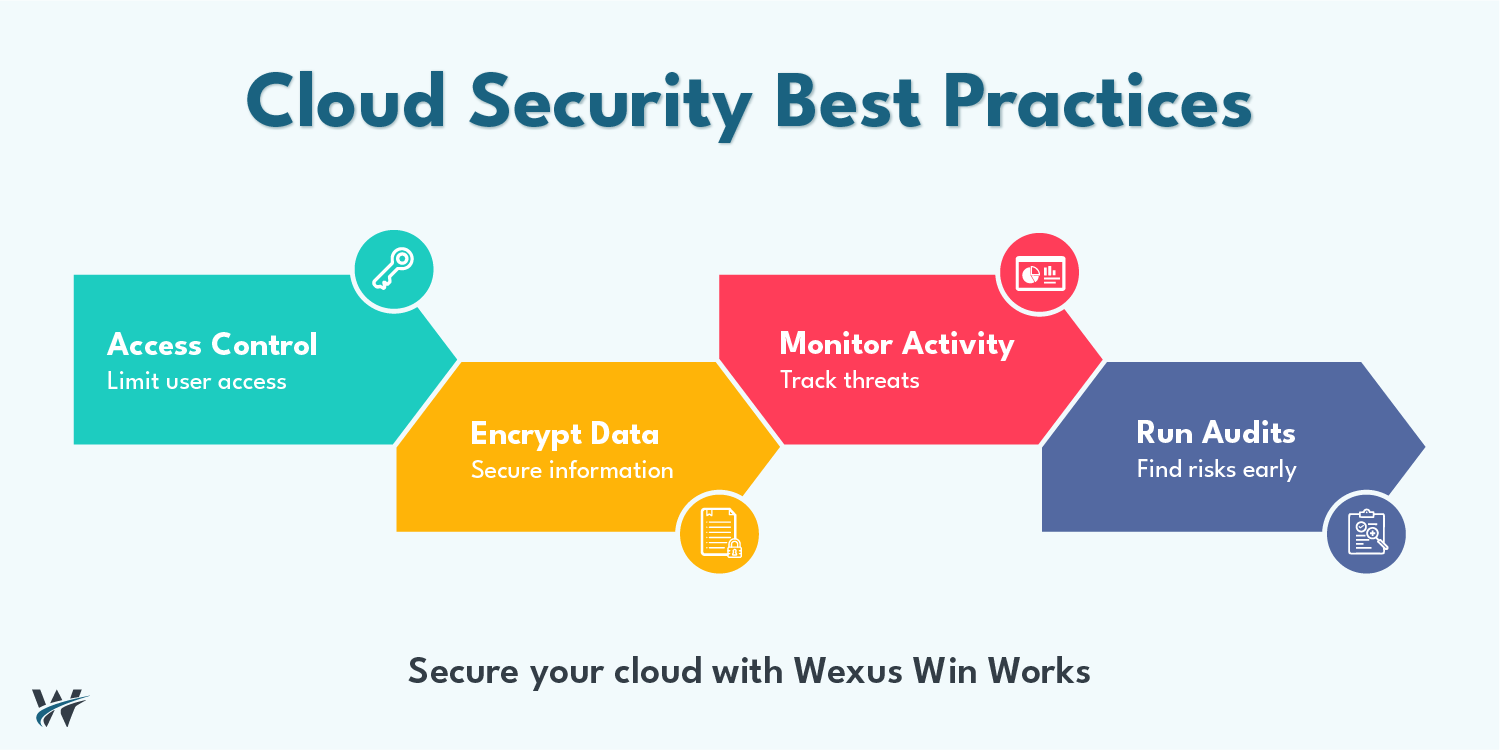
By implementing best practices such as strong access control, data encryption, continuous monitoring, and regular audits, businesses can significantly reduce risks and safeguard their operations.
A proactive approach to cloud security not only protects sensitive data but also ensures long term business success.
Call to Action
Ready to secure your cloud infrastructure?
Partner with Wexus Win Works to build a robust, secure, and scalable cloud environment tailored to your business needs. From risk assessment to continuous monitoring, our experts ensure your cloud remains protected at every level.
Contact us today to get started.