
Published: 11 March 2026, 08:00 PM
Introduction: Cloud Migration Is Driving Modern Digital Transformation
Cloud computing has become the backbone of modern digital infrastructure. Organizations across industries are rapidly transitioning from traditional on premises systems to cloud environments that offer greater flexibility, scalability, and operational efficiency.
In the past, businesses relied heavily on local servers and physical infrastructure to run applications and store data. While this model worked for decades, it presents limitations in today's digital landscape where companies must scale quickly, support remote workforces, and manage increasing volumes of data.
Cloud platforms allow businesses to access computing resources on demand without maintaining expensive hardware. As a result, organizations can innovate faster, improve operational agility, and reduce infrastructure management costs.
However, cloud migration is not simply a technical shift. It requires careful planning, security considerations, and a structured implementation strategy. Without a well defined approach, organizations may face performance issues, unexpected costs, or security vulnerabilities.
Businesses that follow a strategic cloud migration roadmap can unlock the full potential of cloud computing while minimizing risks.
This guide explores why companies are moving to the cloud, the key steps involved in successful migration, common challenges organizations face, and how expert partners can support the transition.
Why Businesses Are Moving to the Cloud
Cloud adoption continues to accelerate because it enables organizations to modernize their IT infrastructure and support digital innovation.
Modern cloud platforms such as Microsoft Azure and Amazon Web Services provide scalable environments that support applications, data storage, analytics, and enterprise software systems.
Businesses are moving to the cloud for several important reasons.
Scalability
Traditional IT infrastructure requires organizations to purchase hardware based on expected demand. If demand grows suddenly, additional hardware must be purchased and installed, which can take weeks or months.
Cloud infrastructure eliminates this limitation. Businesses can scale computing resources up or down instantly depending on operational needs.
For example, companies experiencing seasonal demand spikes can temporarily increase computing capacity and reduce it later without investing in new equipment.
This flexibility allows businesses to adapt quickly to market changes.
Cost Efficiency
Maintaining on premises infrastructure requires significant capital investment in servers, storage devices, networking equipment, and data centers.
Cloud services operate on flexible usage based pricing models. Organizations pay only for the resources they consume.
This model helps reduce capital expenditure and allows companies to convert infrastructure costs into predictable operational expenses.
In addition, cloud providers handle infrastructure maintenance, reducing the burden on internal IT teams.
Remote Accessibility and Hybrid Work Support
Modern work environments are increasingly distributed. Employees often work remotely or collaborate with global teams.
Cloud platforms enable secure access to applications and data from anywhere with an internet connection.
Tools within platforms such as Microsoft 365 allow employees to collaborate, share files, and communicate in real time regardless of location.
This accessibility supports hybrid work environments and improves employee productivity.
Improved Business Continuity
Business continuity is essential for organizations that rely on digital operations.
Cloud providers build redundancy into their infrastructure through multiple data centers and automated failover systems.
If one server fails, another automatically takes over, ensuring that applications remain available.
This built in resilience helps organizations maintain operations during hardware failures, natural disasters, or unexpected disruptions.
Faster Innovation
Cloud platforms provide advanced tools for artificial intelligence, data analytics, automation, and application development.
Organizations can experiment with new technologies without investing heavily in physical infrastructure.
This accelerates innovation and allows businesses to launch new products and services faster.
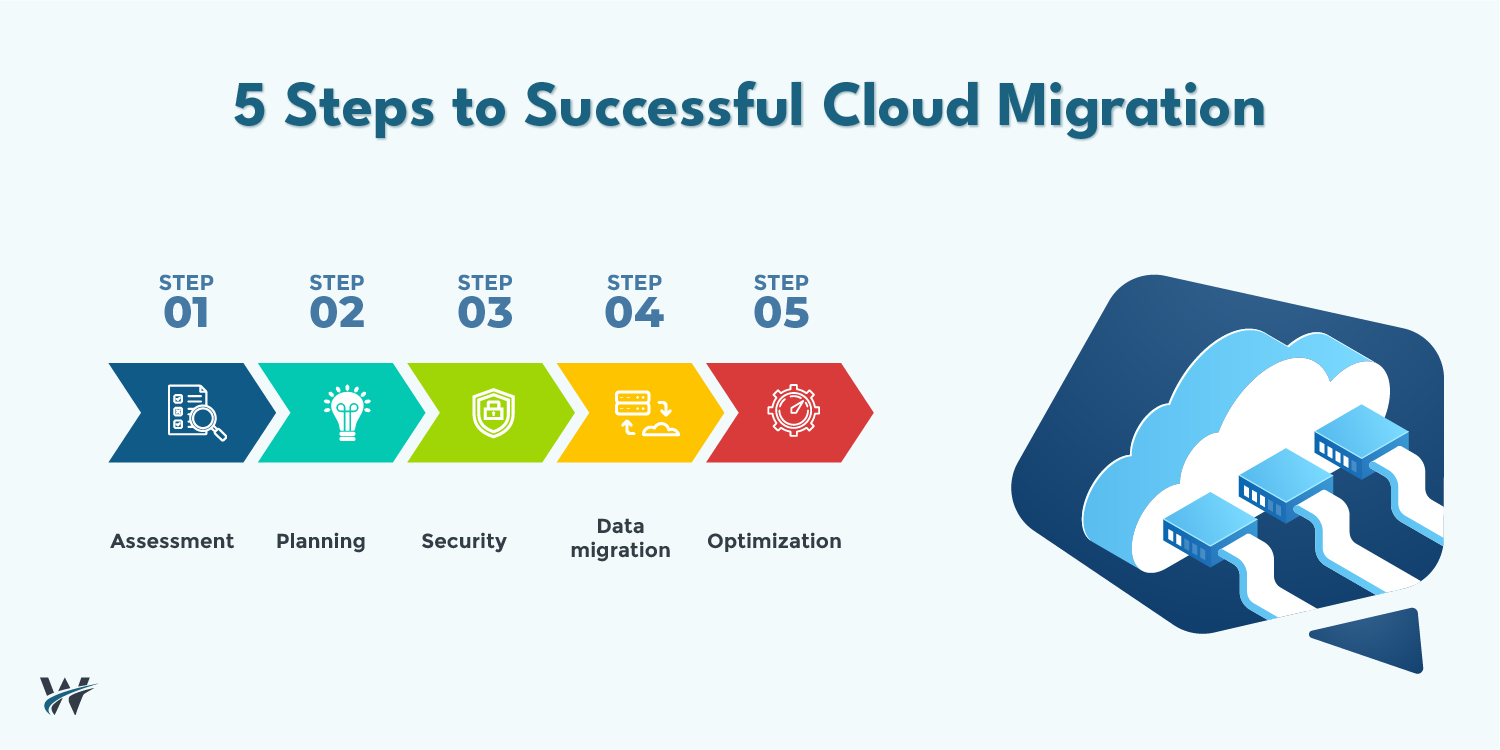
Key Steps in a Successful Cloud Migration Strategy
Cloud migration requires a structured approach to ensure minimal disruption and optimal performance.
Organizations that follow a well defined migration process achieve better outcomes.
Infrastructure Assessment
The first step in any cloud migration strategy is a comprehensive infrastructure assessment.
This involves analyzing existing IT systems, applications, and data environments to determine what should be migrated and how.
Organizations must evaluate:
Understanding these elements helps create a migration roadmap that minimizes risks and downtime.
Migration Planning and Strategy Development
After assessing the existing environment, organizations must develop a detailed migration plan.
This roadmap outlines the sequence of migration activities and defines how applications and workloads will be transferred to the cloud.
Common migration strategies include:
A well structured migration plan ensures a smooth transition while maintaining business continuity.
Security Configuration and Compliance
Security is one of the most critical aspects of cloud migration.
Organizations must implement strong security policies before moving workloads to the cloud.
Key security practices include:
Proper security configuration protects cloud environments from unauthorized access and cyber threats.
Data Migration and Validation
Migrating data from on premises systems to cloud platforms requires careful planning to ensure data integrity and accuracy.
Organizations must securely transfer data while minimizing downtime and avoiding data loss.
During this stage, businesses should perform validation tests to confirm that all data has been transferred correctly.
Testing ensures that applications continue to function properly after migration.
Post Migration Optimization
Cloud migration does not end once systems are transferred.
Organizations must continuously monitor cloud performance and optimize resource usage.
Optimization activities include:
Regular optimization ensures that businesses maximize the benefits of cloud infrastructure.
Common Cloud Migration Challenges
Despite its advantages, cloud migration can present several challenges.
Understanding these challenges allows organizations to plan more effectively.
Legacy Application Limitations
Many organizations rely on legacy applications designed for traditional infrastructure.
These systems may require significant modifications before they can operate effectively in cloud environments.
Data Security Concerns
Businesses must ensure that sensitive information remains secure during and after migration.
Strong encryption, access controls, and compliance frameworks are essential for protecting data.
Unexpected Cloud Costs
Without proper monitoring, cloud resource usage can increase rapidly.
Organizations must implement cost management tools and governance policies to control spending.
Integration Issues
Cloud environments must integrate with existing systems such as enterprise applications, databases, and third party platforms.
Poor integration planning can lead to operational disruptions.
Best Practices for Successful Cloud Migration
Organizations can improve their migration outcomes by following several best practices.
Develop a Clear Migration Roadmap
A detailed migration roadmap ensures that all stakeholders understand the transition process.
Implement Strong Security Policies
Security must be integrated into every stage of the migration process.
Train Employees and IT Teams
Employees should understand how to use cloud systems effectively to maximize productivity.
Monitor Performance Continuously
Performance monitoring tools help organizations identify issues early and maintain optimal system performance.
How Wexus Win Works Helps Businesses Move to the Cloud
Successful cloud migration requires technical expertise and strategic planning.
Wexus Win Works provides comprehensive cloud migration services designed to support businesses throughout the transition process.
Our services include:
Our team helps organizations modernize their infrastructure while minimizing risk and disruption.
By combining cloud expertise with strategic consulting, we ensure that businesses maximize the value of their cloud investments.
The Future of Cloud Computing
Cloud computing will continue to play a central role in digital transformation strategies.
Emerging technologies such as artificial intelligence, automation, and advanced analytics rely heavily on scalable cloud environments.
Organizations that successfully migrate to the cloud position themselves for long term innovation and growth.
Cloud infrastructure enables companies to respond faster to market demands, launch new services more quickly, and scale operations efficiently.
Businesses that delay cloud adoption risk falling behind competitors that leverage modern digital infrastructure.
Building a Future Ready Cloud Strategy
Cloud migration is more than a technology upgrade. It is a strategic initiative that enables organizations to modernize operations, improve efficiency, and support digital innovation.
Businesses that adopt a structured migration strategy benefit from:
However, successful cloud migration requires careful planning, security implementation, and continuous optimization.
With the right expertise and strategy, organizations can transform their IT infrastructure into a powerful foundation for innovation.
Start Your Cloud Migration Journey with Wexus Win Works
If your organization is planning to move to the cloud, expert guidance can make the transition faster and more secure.
Wexus Win Works helps businesses design and implement cloud migration strategies that maximize performance, strengthen security, and deliver long term value.
Contact Wexus Win Works today to build a secure, scalable, and future ready cloud environment for your organization.