
Published: 27 April 2026, 09:00PM
Introduction
As businesses expand and digital demands increase, traditional IT infrastructure often becomes a bottleneck. Legacy systems can be expensive to maintain, difficult to scale, and inefficient in supporting modern workloads. Organizations relying on on-premise servers frequently face challenges such as limited storage capacity, high maintenance costs, and reduced flexibility.
Cloud migration provides a powerful solution to these challenges by enabling businesses to move their data, applications, and IT resources to advanced cloud platforms such as Microsoft Azure, Amazon Web Services, and Google Cloud Platform.
A well-structured cloud migration strategy not only improves operational efficiency but also enhances business agility, reduces costs, and enables innovation. In today’s competitive landscape, cloud adoption is no longer optional. It is a critical step toward digital transformation and long-term business success.
What Is Cloud Migration
Cloud migration is the process of transferring digital assets such as data, applications, databases, and IT processes from on-premise infrastructure or legacy systems to cloud-based environments.
This transition can involve moving from:
Cloud migration is not just about moving data. It involves rethinking IT architecture, optimizing workloads, and ensuring that systems perform efficiently in a cloud environment.
There are several common migration approaches, often referred to as the “6 Rs”:
Each approach depends on business goals, application complexity, and budget.
Benefits of Cloud Migration
One of the biggest advantages of cloud migration is cost optimization. Traditional IT infrastructure requires significant capital investment in hardware, maintenance, and upgrades.
Cloud platforms operate on a pay-as-you-go model, allowing businesses to pay only for the resources they use.
This reduces upfront costs and improves financial planning.
Cloud environments offer unmatched scalability. Businesses can easily scale resources up or down based on demand without investing in additional hardware.
This is particularly useful for:
Leading cloud providers invest heavily in security infrastructure, offering features such as:
Platforms like Microsoft Azure and Amazon Web Services comply with global security standards, helping businesses protect sensitive data.
Cloud computing enables employees to access systems and data from anywhere with an internet connection. This supports remote work, global collaboration, and business continuity.
Cloud platforms allow rapid deployment of applications and services. Businesses can launch new products, updates, and features much faster compared to traditional environments.
Cloud solutions provide built-in backup and disaster recovery capabilities. This ensures that business operations continue even in the event of system failures or data loss.
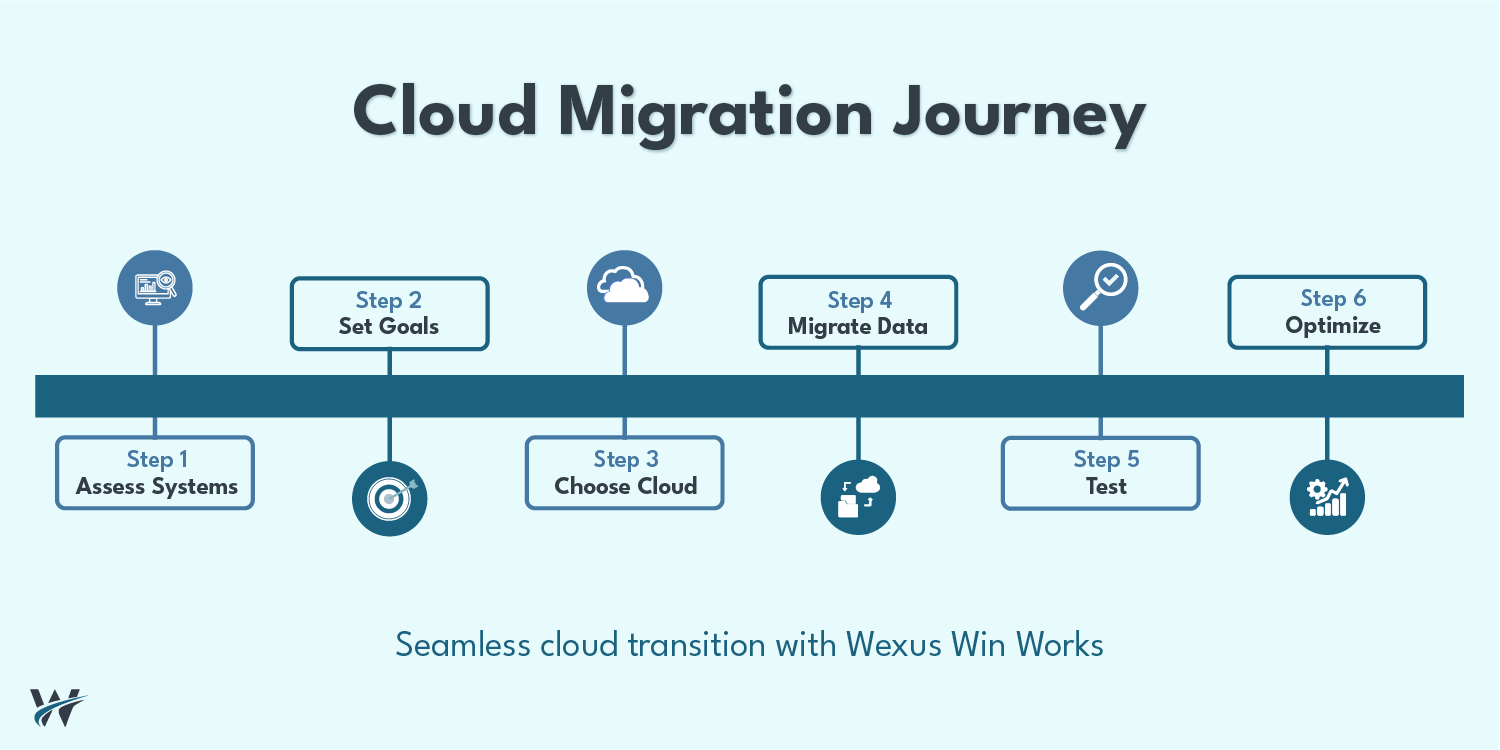
Step-by-Step Cloud Migration Process
A successful cloud migration requires a structured and strategic approach. Below is a detailed step-by-step process to guide businesses through a smooth transition.
Step 1: Assess Current Infrastructure
The first step is to evaluate your existing IT environment.
This includes:
Understanding your current infrastructure helps identify which components can be migrated easily and which require modification.
Key questions to consider:
A thorough assessment minimizes risks and ensures better planning.
Step 2: Define Migration Goals
Before moving to the cloud, businesses must define clear objectives. These goals will guide the entire migration process.
Common goals include:
Having well-defined goals helps in choosing the right strategy and measuring success after migration.
Step 3: Choose the Right Cloud Model
There are three main cloud deployment models:
Public Cloud
Resources are hosted on third-party platforms like Google Cloud Platform and shared across multiple users.
Private Cloud
Dedicated infrastructure for a single organization, offering higher control and security.
Hybrid Cloud
A combination of on-premise and cloud environments, allowing businesses to keep sensitive data locally while leveraging cloud benefits.
The choice depends on factors such as:
Step 4: Select the Right Cloud Provider
Choosing the right provider is critical for long-term success.
The most popular options include:
Each provider offers unique features:
Businesses should evaluate providers based on:
Step 5: Plan Data Migration
Data migration is one of the most critical phases. Poor planning can lead to data loss, security risks, and downtime.
Key considerations include:
Businesses should ensure:
Using migration tools and automation can significantly improve efficiency.
Step 6: Test and Validate
Before full deployment, it is essential to test the migrated systems.
Testing should include:
This step helps identify issues early and ensures that systems function as expected in the cloud environment.
Step 7: Optimize Post-Migration
Cloud migration does not end after deployment. Continuous optimization is necessary to maximize benefits.
Post-migration activities include:
Cloud platforms provide analytics and monitoring tools to help businesses track performance and make improvements.
Cloud Migration Strategies
Different businesses require different migration strategies. Some of the commonly used approaches include:
Lift and Shift
Move applications without major changes. Quick and cost-effective but may not fully utilize cloud benefits.
Replatforming
Make minor optimizations to improve performance in the cloud.
Refactoring
Redesign applications to fully leverage cloud capabilities. This offers the highest long-term value but requires more time and investment.
Hybrid Migration
Move some workloads to the cloud while keeping others on-premise.
Choosing the right strategy depends on business goals, timelines, and technical requirements.
Challenges in Cloud Migration
While cloud migration offers numerous benefits, it also comes with challenges that businesses must address.
Transferring sensitive data to the cloud can expose it to risks if not handled properly.
Businesses must implement strong encryption, access controls, and monitoring systems.
Migration can lead to temporary service disruptions. Proper planning and phased migration strategies can minimize downtime.
Legacy applications may not be compatible with cloud environments. These systems may require modification or replacement.
Without proper monitoring, cloud costs can increase unexpectedly. Businesses should use cost management tools and set budgets to control spending.
Cloud migration requires expertise in cloud architecture, security, and management.
Organizations may need to train employees or work with experienced consultants.
Best Practices for Successful Cloud Migration
To ensure a smooth transition, businesses should follow these best practices:
Partnering with experienced IT consultants can also reduce risks and improve outcomes.
Future of Cloud Migration
Cloud migration is continuously evolving with advancements in technology.
Trends shaping the future include:
Platforms like Google Cloud Platform are already leading innovation in AI-driven cloud solutions, enabling businesses to gain deeper insights and improve decision-making.
Conclusion
Cloud migration is more than just a technological shift. It is a strategic move that transforms how businesses operate, scale, and innovate.
By moving to platforms like Microsoft Azure, Amazon Web Services, and Google Cloud Platform, organizations can reduce costs, improve performance, and enhance flexibility.
However, success depends on careful planning, the right strategy, and continuous optimization. Businesses that approach cloud migration strategically will be better positioned to compete in a rapidly evolving digital landscape.
Call to Action
Ready to move your business to the cloud?
Wexus Win Works helps organizations plan, execute, and optimize cloud migration strategies tailored to their needs. From infrastructure assessment to post-migration support, our experts ensure a seamless and secure transition.
Contact us today to start your cloud journey and unlock the full potential of modern technology.