
Published: 20 May 2026, 09:00PM
Introduction
Winning federal government contracts requires far more than simply responding to a Request for Proposal (RFP). Successful contractors understand that the real work begins months, and sometimes years, before the solicitation is officially released. In today’s highly competitive federal marketplace, companies that invest in capture management significantly improve their chances of winning government contracts, increasing both revenue opportunities and long-term growth.
Federal agencies continue to invest heavily in digital transformation, cloud computing, cybersecurity, artificial intelligence, data analytics, infrastructure modernization, and managed IT services. As competition for these contracts increases, organizations need a structured and proactive strategy to position themselves ahead of competitors. This is where capture management becomes essential.
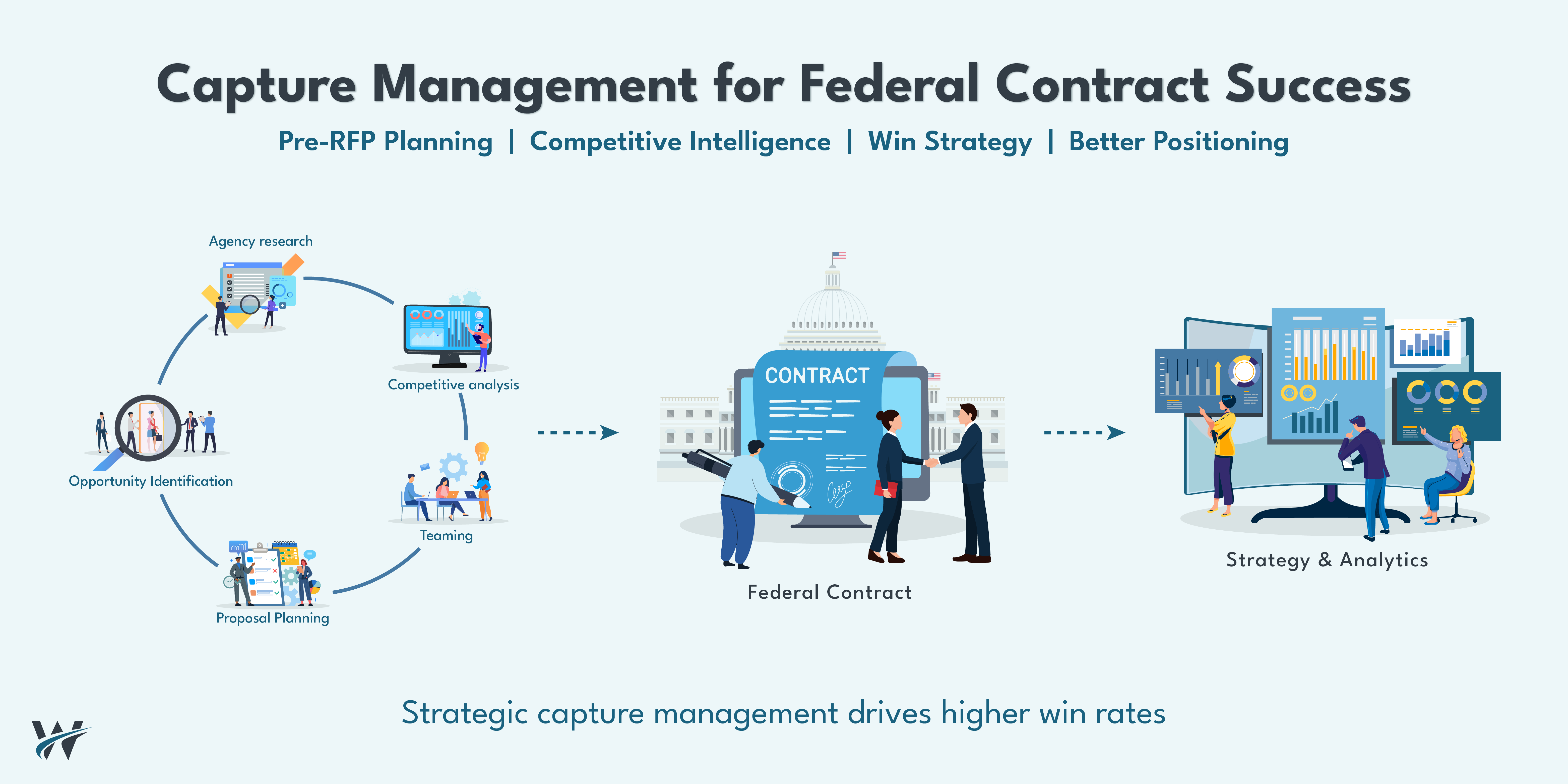
Capture management is the process of identifying, pursuing, shaping, and positioning for contract opportunities before the formal proposal stage begins. It enables businesses to better understand agency priorities, align solutions with customer needs, develop strategic partnerships, and create compelling win strategies long before an RFP is issued.
For IT consulting firms, government contractors, cybersecurity providers, cloud service companies, and staffing organizations, effective capture management can dramatically improve proposal quality, increase win rates, and reduce the risks associated with federal procurement.
This blog explores the importance of capture management, its key components, benefits, best practices, and how organizations can build a winning strategy before the RFP is released.
What Is Capture Management?
Capture management is a strategic business development process focused on identifying and securing future contract opportunities before they enter the proposal stage. Unlike proposal management, which focuses on responding to an active solicitation, capture management begins much earlier in the procurement lifecycle.
The primary objective of capture management is to position a company as the preferred solution provider before the government agency finalizes requirements and releases the RFP.
Capture management typically includes:
A capture manager leads this process by coordinating internal teams, gathering intelligence, engaging stakeholders, and ensuring the organization is strategically aligned with the opportunity.
In federal government contracting, capture management is especially important because agencies often communicate their requirements, pain points, and future initiatives well before formal solicitations are issued. Companies that engage early gain a substantial competitive advantage.
Why Capture Management Matters in Federal Contracting
Federal procurement is highly competitive. Many contracts receive bids from dozens of qualified vendors, making it difficult for companies to stand out solely through proposal writing.
Capture management helps businesses:
Without capture management, organizations often enter opportunities too late, lacking customer insight, competitor knowledge, and strategic positioning.
Companies that consistently win federal contracts usually have mature capture management processes integrated into their overall business development strategy.
The Federal Procurement Lifecycle and Capture Management
Understanding where capture management fits within the federal procurement lifecycle is essential.
Agencies begin planning future procurements based on mission needs, budget allocations, modernization initiatives, or expiring contracts.
At this stage, companies monitor:
Early identification provides more time to shape strategy.
Agencies conduct market research and gather vendor feedback. This phase is critical for customer engagement and solution positioning.
Capture managers focus on:
Once the RFP is issued, the organization transitions from capture management to proposal management.
Companies with strong capture strategies enter this phase with:
Capture activities continue supporting proposal development until contract award.
Key Components of Effective Capture Management
Not every federal contract opportunity is worth pursuing. Effective capture management begins with evaluating whether an opportunity aligns with company goals, capabilities, and resources.
Important qualification criteria include:
A disciplined bid/no-bid process helps organizations focus resources on high-probability opportunities.
Questions to Ask During Qualification
Proper qualification prevents wasted proposal resources and improves overall win rates.
Competitive analysis is a critical part of capture management. Understanding competitors helps organizations differentiate their offerings and anticipate potential challenges.
Competitive intelligence may include:
Organizations that understand the competitive landscape can create stronger win themes and more effective positioning strategies.
Understanding the Incumbent Advantage
Incumbent contractors often have significant advantages, including:
Capture managers must develop strategies to counter incumbent advantages through innovation, pricing, agility, or specialized expertise.
One of the most important aspects of capture management is understanding the customer.
Federal agencies are mission-driven organizations with unique objectives, challenges, and operational priorities.
Successful contractors invest time learning about:
Methods for Gathering Customer Intelligence
Organizations gather customer insight through:
The better a company understands the customer, the more effectively it can tailor its solution.
Many federal opportunities require capabilities beyond a single company’s expertise. Strategic partnerships are often essential for winning large or complex contracts.
Teaming strategies may include:
Strong teaming relationships can expand technical capabilities, improve past performance qualifications, and increase contract eligibility.
Choosing the Right Partners
Effective teaming partners should offer:
Poor partnership decisions can weaken proposals and create delivery risks.
A win strategy defines why the customer should choose your organization over competitors.
An effective win strategy includes:
Win themes should directly address agency priorities and demonstrate measurable value.
Examples of Win Themes
Examples may include:
Strong win strategies are built around customer needs, not generic company capabilities.
Benefits of Capture Management
Higher Win Rates
Capture management significantly improves proposal competitiveness by ensuring organizations are strategically positioned before the RFP is released.
Benefits include:
Organizations with mature capture processes consistently achieve higher federal contract win rates.
Better Resource Planning
Federal proposals require significant investments in:
Capture management helps prioritize the most valuable opportunities, improving resource allocation and reducing wasted effort.
Stronger Customer Relationships
Early engagement builds trust and credibility with federal agencies.
Relationship-building activities may include:
Strong customer relationships often improve visibility into future opportunities and procurement strategies.
Reduced Proposal Risk
Organizations that wait until RFP release often face challenges such as:
Capture management reduces these risks through proactive planning and preparation.
Improved Solution Development
Capture activities allow companies to refine solutions based on customer input before formal solicitation.
This leads to:
Capture Management Best Practices
Start Early
The earlier organizations begin capture activities, the better positioned they are for success.
Many successful contractors begin capture management:
Early engagement provides more opportunities to shape solutions and build relationships.
Build a Dedicated Capture Team
Successful organizations often establish dedicated capture teams that include:
Collaboration across departments improves strategy development and execution.
Maintain a Strong Opportunity Pipeline
Companies should continuously monitor federal procurement trends and maintain a healthy pipeline of future opportunities.
Pipeline management tools may track:
A strong pipeline supports long-term business growth.
Develop Customer-Centric Messaging
Federal agencies care about mission outcomes, not vendor marketing language.
Effective messaging should focus on:
Customer-centric communication improves engagement and proposal effectiveness.
Use Data-Driven Decision Making
Capture management should rely on measurable data whenever possible.
Important metrics include:
Data-driven insights improve strategic decision-making.
Common Capture Management Challenges
Limited Customer Access
Federal procurement regulations limit certain interactions during the acquisition process.
Organizations must ensure ethical and compliant engagement while still building strong relationships.
Resource Constraints
Capture management requires significant time and personnel investment.
Small and mid-sized businesses may struggle with:
Strategic prioritization becomes critical.
Highly Competitive Markets
Popular federal opportunities attract intense competition from large integrators, specialized firms, and incumbent contractors.
Differentiation is essential.
Changing Procurement Requirements
Agency priorities and procurement strategies can shift quickly due to:
Capture teams must remain flexible and adaptable.
The Role of Technology in Capture Management
Modern capture management increasingly relies on technology platforms and analytics tools.
Organizations use:
Technology improves visibility, forecasting, and coordination across teams.
AI and Predictive Analytics
Artificial intelligence is helping organizations:
AI-driven insights are becoming increasingly valuable in federal business development.
Capture Management for IT and Technology Companies
IT companies face unique opportunities in federal contracting due to growing government investments in:
Technology providers must align solutions with federal initiatives and compliance requirements.
Important Federal IT Priorities
Agencies increasingly prioritize:
Capture managers in the IT sector must stay informed about evolving technology mandates and procurement trends.
Building a Long-Term Capture Strategy
Capture management should not be treated as a one-time activity. Organizations need a repeatable, scalable process that supports long-term growth.
A sustainable capture strategy includes:
Companies that consistently invest in capture management create a stronger competitive position over time.
Measuring Capture Management Success
Organizations should regularly evaluate capture effectiveness using measurable KPIs.
Common metrics include:
Tracking performance helps refine future strategies and improve operational efficiency.
Conclusion
Capture management is one of the most important drivers of success in federal government contracting. Organizations that proactively identify opportunities, engage customers early, analyze competitors, build strategic partnerships, and develop compelling win strategies position themselves for significantly higher contract win rates.
In today’s competitive federal marketplace, waiting until the RFP is released is no longer enough. Successful contractors invest in long-term planning, relationship building, and strategic positioning well before formal solicitations appear.
For IT consulting firms, cybersecurity providers, cloud service companies, staffing organizations, and technology integrators, capture management provides a critical advantage in securing high-value federal opportunities.
By implementing a structured capture management process, businesses can improve proposal readiness, reduce risk, strengthen customer relationships, and build a sustainable pipeline of federal contract opportunities.
Call to Action
Looking to improve your federal contract win rates?
Our capture management experts help organizations identify opportunities, build winning strategies, strengthen agency relationships, and prepare for successful proposal submissions.
Contact us today to develop a proactive federal business development strategy that drives long-term growth and competitive advantage.