
Introduction
Winning a government contract requires more than simply responding to every requirement in a Request for Proposal (RFP). Many organizations submit technically compliant proposals that clearly explain their services, qualifications, and experience, yet they still lose to competitors. One of the biggest reasons is the absence of compelling win themes.
A strong proposal does not just tell evaluators what your company does. It consistently demonstrates why your organization is the best choice to help the agency achieve its mission. This is the purpose of a win theme.
Win themes create a clear, memorable message that connects your capabilities with the customer's priorities. When developed correctly, they reinforce your value throughout the proposal, helping evaluators understand why your solution stands above the competition.
What Is a Win Theme?
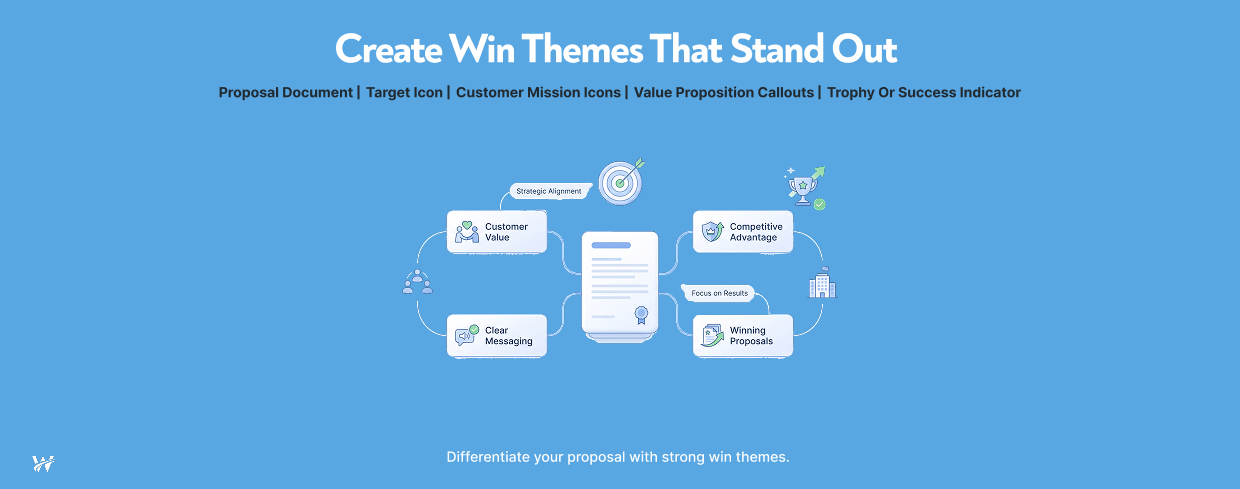
A win theme is a concise, customer-focused message that highlights the unique value your organization brings to a contract opportunity. It explains why your solution is the right fit based on the agency's objectives, evaluation criteria, and mission.
An effective win theme typically emphasizes:
Unlike a slogan or marketing tagline, a win theme is backed by evidence. Every claim should be supported with relevant experience, measurable outcomes, certifications, qualified personnel, or proven methodologies.
Most importantly, win themes should appear consistently throughout the proposal instead of being mentioned only in the executive summary.
Why Win Themes Matter
Proposal evaluators often review dozens of submissions under tight deadlines. Even a technically strong proposal can blend into the competition if it lacks consistent messaging.
Well-developed win themes help evaluators quickly recognize the strengths of your solution and remember them during the evaluation process.
Effective win themes can:
When evaluators repeatedly encounter the same customer-focused message supported by facts, they are more likely to remember your proposal long after they finish reading.
Characteristics of Effective Win Themes
Not every value statement qualifies as a win theme. The strongest themes share several important characteristics.
Customer-Centric
The focus should always remain on the customer's needs rather than your company's achievements.
Instead of saying:
"Our company has 20 years of experience."
Focus on:
"Our experienced team helps agencies accelerate implementation while reducing project risk."
This subtle shift emphasizes the benefit to the customer instead of simply listing credentials.
Evidence-Based
Unsupported claims rarely persuade evaluators.
Every win theme should include evidence such as:
For example:
"Our standardized implementation methodology reduced deployment timelines by 30% while maintaining full compliance across multiple federal projects."
Specific results create credibility.
Consistent
Win themes should be visible throughout the proposal, including:
Consistent messaging reinforces your value at every stage of the evaluation.
Easy to Remember
The best win themes are simple and direct.
Avoid complicated language or lengthy explanations.
A concise statement is more likely to stay with evaluators than a paragraph filled with technical jargon.
Common Areas for Strong Win Themes
Although every opportunity is different, several themes frequently resonate with government agencies.
Faster Implementation
Agencies often need solutions delivered quickly without sacrificing quality.
A win theme focused on rapid deployment may highlight:
Lower Operational Risk
Government customers value predictable outcomes.
Risk-focused win themes may emphasize:
Showing how your organization minimizes project risk builds evaluator confidence.
Proven Technical Expertise
Technical capability remains one of the strongest differentiators.
Examples include experience with:
Instead of listing technologies, explain how your expertise delivers measurable business value.
Highly Qualified Personnel
People often determine project success.
Highlight:
Agencies want confidence that the proposed team can successfully execute the work.
Scalable Delivery Model
Many government projects evolve over time.
Demonstrating scalability shows your organization can support changing requirements without disrupting performance.
Examples include:
Building Win Themes from Customer Needs
Strong win themes begin with understanding the customer, not the competition.
Before writing your proposal, study:
Look for recurring priorities throughout the solicitation.
For example, if the agency repeatedly emphasizes cybersecurity, compliance, and modernization, your proposal should consistently reinforce those priorities through your win themes.
Rather than creating generic messages, tailor each theme specifically to the opportunity.
Reinforcing Win Themes Throughout the Proposal
One of the most common mistakes is mentioning a win theme only once.
Instead, reinforce the message naturally across multiple sections.
For example, if your primary win theme is "Reducing implementation risk through experienced project leadership," that idea can appear in:
Each section should provide additional evidence supporting the same message.
This repetition helps evaluators connect your capabilities to the agency's objectives.
Common Mistakes to Avoid
Even experienced proposal teams sometimes weaken their messaging by making avoidable mistakes.
Focusing Too Much on the Company
Winning proposals focus on customer outcomes rather than company history.
Instead of lengthy descriptions about your organization, explain how your expertise solves the customer's challenges.
Making Generic Claims
Statements such as "high quality," "industry leader," or "excellent customer service" lack impact without supporting evidence.
Replace general statements with measurable achievements and relevant examples.
Inconsistent Messaging
Different proposal writers may unintentionally emphasize different priorities.
A proposal manager should ensure that every section reinforces the same strategic themes.
Ignoring Evaluation Criteria
Win themes should directly support the evaluation factors identified in the solicitation.
If the agency values technical capability, staffing, and risk management, those priorities should be reflected consistently throughout your messaging.
Turning Win Themes into a Competitive Advantage
Successful proposal teams develop win themes early in the proposal process, often before writing begins.
This allows every contributor to align their content around a shared strategy.
A simple approach includes:
This disciplined approach creates a proposal that feels unified rather than assembled from separate sections.
Conclusion
Winning proposals are built on more than technical compliance. They tell a compelling story that helps evaluators understand why your organization offers the best overall value.
Strong win themes connect your experience, capabilities, and proven results directly to the agency's mission and objectives. They provide consistency across the proposal, reinforce your competitive strengths, and make your solution easier for evaluators to remember.
Organizations that invest time in developing meaningful, evidence-based win themes produce proposals that are more persuasive, more customer-focused, and better positioned for success in competitive procurements.
Call to Action
Ready to strengthen your proposal strategy?
Wexus Win Works helps organizations develop compelling win themes, compliant proposal strategies, and customer-focused responses that improve competitiveness and increase the likelihood of contract success.
Contact us today to learn how our proposal management experts can help you create winning proposals that stand out.