
Published: 08 May 2026, 09:00PM
Introduction
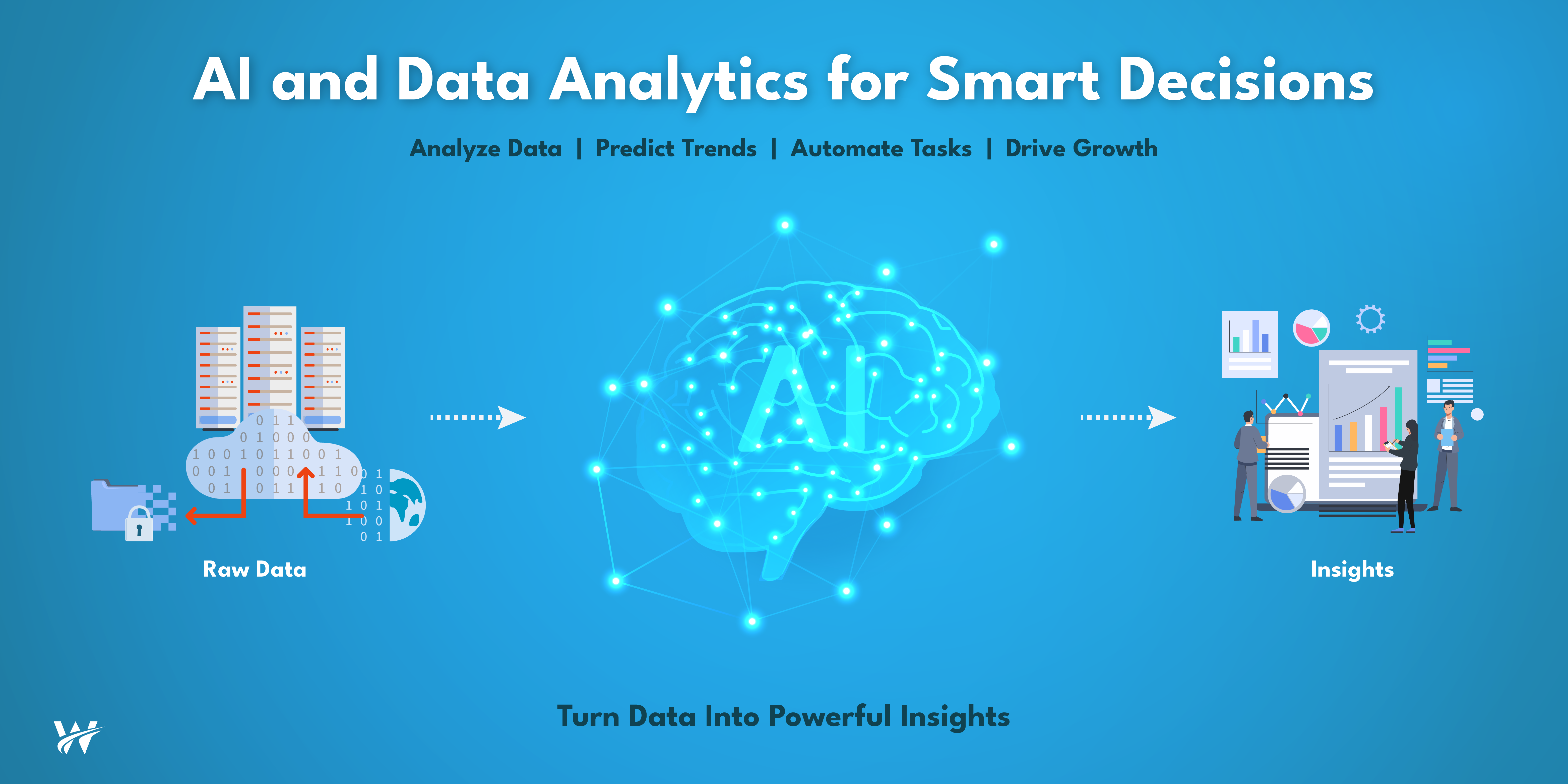
In today’s digital economy, businesses generate enormous volumes of data every second. From customer interactions and sales transactions to website activity and operational metrics, organizations are constantly collecting information. However, raw data alone has little value unless it is properly analyzed and transformed into actionable insights.
This is where AI and data analytics play a critical role. Artificial Intelligence (AI) and advanced analytics technologies help businesses process large datasets, identify patterns, automate operations, and make smarter decisions faster. Organizations across industries are using AI-powered analytics to improve efficiency, predict market trends, enhance customer experiences, and gain a competitive advantage.
As digital transformation continues to accelerate, companies that leverage AI and data analytics are better positioned to grow, innovate, and adapt to changing market demands. Businesses that fail to adopt data-driven strategies risk falling behind competitors who can make faster and more informed decisions.
This blog explores the importance of AI and data analytics, their benefits, business applications, challenges, implementation strategies, and how these technologies are shaping the future of modern business operations.
What Is AI and Data Analytics?
AI and data analytics are closely connected technologies that help organizations extract value from data and improve business intelligence.
What Is Artificial Intelligence (AI)?
Artificial Intelligence refers to computer systems and software that can perform tasks that typically require human intelligence. AI systems can analyze data, recognize patterns, make predictions, automate repetitive processes, and continuously improve through machine learning.
AI technologies include:
AI enables businesses to automate decision-making processes and improve operational efficiency.
What Is Data Analytics?
Data analytics involves collecting, processing, and analyzing data to identify useful information and support business decisions. It helps organizations understand trends, customer behavior, operational performance, and future opportunities.
The four major types of data analytics include:
Analyzes historical data to understand what happened.
Identifies why something happened.
Forecasts future outcomes using historical data and AI models.
Recommends actions businesses should take to achieve desired outcomes.
Together, AI and data analytics help businesses convert data into strategic insights that drive growth and innovation.
Why AI and Data Analytics Matter in Modern Business
Businesses today operate in highly competitive and rapidly changing environments. Decision-making based on assumptions or outdated reports is no longer effective.
AI and data analytics help organizations:
Data-driven businesses are more agile and capable of adapting to market changes.
Key Benefits of AI and Data Analytics
One of the biggest advantages of AI and data analytics is improved decision-making.
Businesses can analyze real-time data to make informed decisions instead of relying on intuition. AI systems can process massive datasets faster than humans and identify insights that may otherwise go unnoticed.
Benefits Include:
Executives and managers can use dashboards and analytics tools to monitor business performance and make proactive decisions.
AI automates repetitive and time-consuming tasks, allowing employees to focus on higher-value activities.
Automation improves operational efficiency and reduces manual workload.
Common Automation Examples:
Businesses can significantly reduce operational costs through intelligent automation.
Predictive analytics uses AI algorithms and historical data to forecast future outcomes.
This helps businesses prepare for market changes, customer demands, and operational risks.
Predictive Analytics Applications:
Organizations can make proactive business decisions rather than reactive ones.
AI and analytics provide deep insights into customer preferences, purchasing behavior, and engagement patterns.
Businesses can use these insights to create personalized marketing campaigns and improve customer satisfaction.
Customer Analytics Benefits:
Understanding customer behavior helps businesses improve loyalty and revenue.
AI-driven analytics identifies inefficiencies in business processes and recommends improvements.
Organizations can optimize workflows, reduce downtime, and improve productivity.
Operational Improvements Include:
Efficient operations directly contribute to higher profitability.
AI systems can analyze transactions and detect unusual patterns that may indicate fraud or security threats.
This is particularly valuable in banking, healthcare, insurance, and eCommerce industries.
AI Fraud Detection Helps:
AI systems can continuously monitor systems in real time to identify anomalies.
Businesses that effectively use AI and data analytics gain a strong competitive advantage.
They can:
Data-driven companies are more agile and future-ready.
How AI and Data Analytics Work Together
AI and data analytics complement each other to deliver intelligent business solutions.
Data Collection
Businesses collect data from multiple sources including:
Data Processing
Collected data is cleaned, organized, and prepared for analysis.
AI Analysis
AI algorithms analyze patterns, trends, and relationships within the data.
Insight Generation
Analytics tools generate dashboards, reports, and predictive insights.
Decision Making
Business leaders use insights to improve strategies and operations.
This process enables organizations to become truly data-driven.
Real-World Use Cases of AI and Data Analytics
Businesses use AI-powered analytics to predict future sales trends based on historical data, seasonal patterns, and market conditions.
Benefits:
Sales teams can make smarter decisions using accurate forecasts.
AI helps organizations understand how customers interact with products and services.
Businesses can analyze:
Benefits:
Retailers and eCommerce companies heavily rely on customer analytics.
Financial institutions use AI to detect fraudulent activities in real time.
AI systems monitor:
Benefits:
AI improves financial security significantly.
AI-powered automation tools streamline repetitive business operations.
Common Automation Areas:
Automation reduces operational costs and improves efficiency.
Healthcare organizations use AI and data analytics to improve patient outcomes and operational efficiency.
Applications Include:
AI is transforming healthcare delivery worldwide.
AI helps businesses optimize logistics and supply chain operations.
Benefits:
Efficient supply chains improve customer satisfaction and profitability.
AI-driven security systems continuously monitor networks and detect threats before they cause damage.
AI Cybersecurity Features:
Businesses can strengthen cybersecurity using AI-powered solutions.
Industries Benefiting From AI and Data Analytics
AI and analytics technologies are transforming nearly every industry.
Retail
Banking and Finance
Healthcare
Manufacturing
Education
Logistics
IT and Technology
AI adoption continues to expand across sectors.
Challenges in Implementing AI and Data Analytics
Although AI and analytics offer significant benefits, businesses may face several implementation challenges.
Poor-quality data can produce inaccurate insights and unreliable predictions.
Businesses must ensure:
AI implementation may require investment in:
However, long-term benefits often outweigh initial costs.
Organizations must protect sensitive customer and business data.
Businesses should implement:
Security is critical for successful AI adoption.
AI and analytics require expertise in:
Many organizations face talent shortages in these areas.
Businesses often struggle to integrate AI tools with legacy systems.
Proper planning and modern cloud infrastructure can simplify integration.
Best Practices for Successful AI and Data Analytics Implementation
Define Clear Business Goals
Organizations should identify:
Clear goals ensure better ROI.
Invest in Data Quality
High-quality data is essential for accurate analytics and AI performance.
Businesses should establish strong data governance practices.
Use Scalable Cloud Infrastructure
Cloud platforms like Microsoft Azure, AWS, and Google Cloud provide scalable AI and analytics capabilities.
Cloud solutions improve flexibility and reduce infrastructure costs.
Focus on Cybersecurity
Protecting data and AI systems is essential.
Businesses should implement:
Train Employees
Organizations should provide AI and analytics training to employees.
A skilled workforce improves adoption and operational efficiency.
Start Small and Scale Gradually
Businesses should begin with pilot projects before expanding AI initiatives organization-wide.
This reduces risks and improves implementation success.
The Future of AI and Data Analytics
The future of business will increasingly depend on AI and data-driven technologies.
Emerging trends include:
Generative AI
AI systems that create content, code, reports, and business insights.
Real-Time Analytics
Businesses will increasingly rely on instant data analysis for faster decisions.
AI-Powered Automation
Advanced automation will transform operations across industries.
Edge AI
AI processing closer to devices and users for faster performance.
Explainable AI
Organizations will demand transparent and understandable AI models.
AI in Cybersecurity
AI will play a larger role in proactive threat detection and prevention.
Businesses that embrace these innovations will gain significant competitive advantages.
Why Businesses Should Invest in AI and Data Analytics
Organizations that invest in AI and analytics can:
AI is no longer optional for businesses seeking long-term growth and digital transformation.
Companies that leverage intelligent analytics can make faster, smarter, and more strategic decisions in increasingly competitive markets.
Conclusion
AI and data analytics are transforming how businesses operate, compete, and grow. In an era where data is one of the most valuable business assets, organizations must adopt intelligent technologies to extract meaningful insights and drive better outcomes.
From predictive analytics and automation to customer intelligence and fraud detection, AI-powered solutions help businesses improve efficiency, reduce risks, and make informed decisions faster.
As industries continue to evolve, organizations that embrace AI and data analytics will be better equipped to adapt to market changes, improve customer experiences, and maintain a competitive edge.
Businesses that invest in data-driven strategies today are building the foundation for future innovation, scalability, and long-term success.
Call to Action (CTA)
Ready to unlock the power of AI and data analytics for your business?
At Microsoft Azure and modern cloud-driven analytics platforms, businesses can transform raw data into actionable insights that improve decision-making, automate operations, and accelerate growth.
Whether you want to implement predictive analytics, improve customer insights, automate workflows, or strengthen business intelligence, the right AI and data strategy can help your organization stay ahead of the competition.
Contact our team today to discover how AI and data analytics solutions can help your business become more efficient, scalable, and data-driven.